
 Pin This
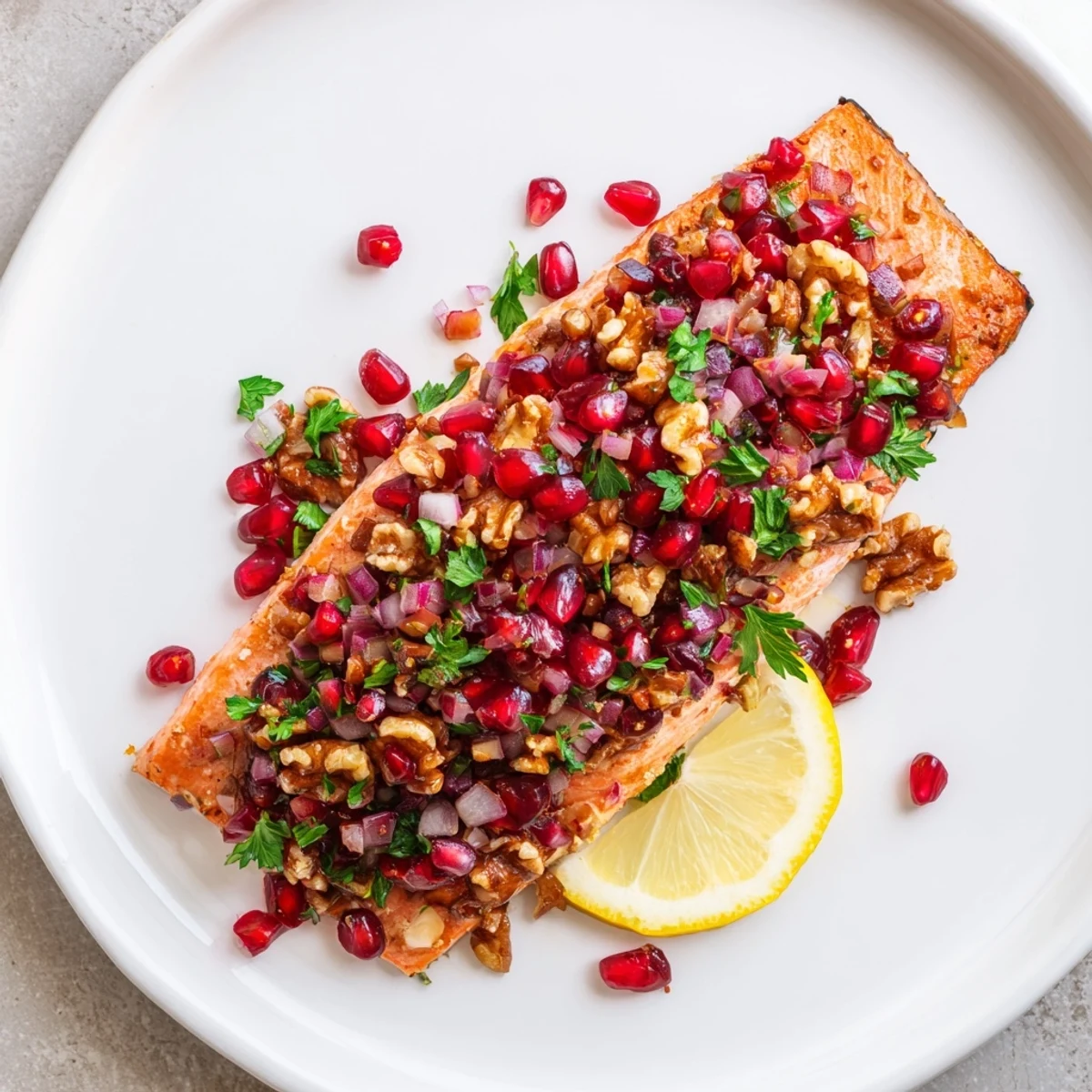
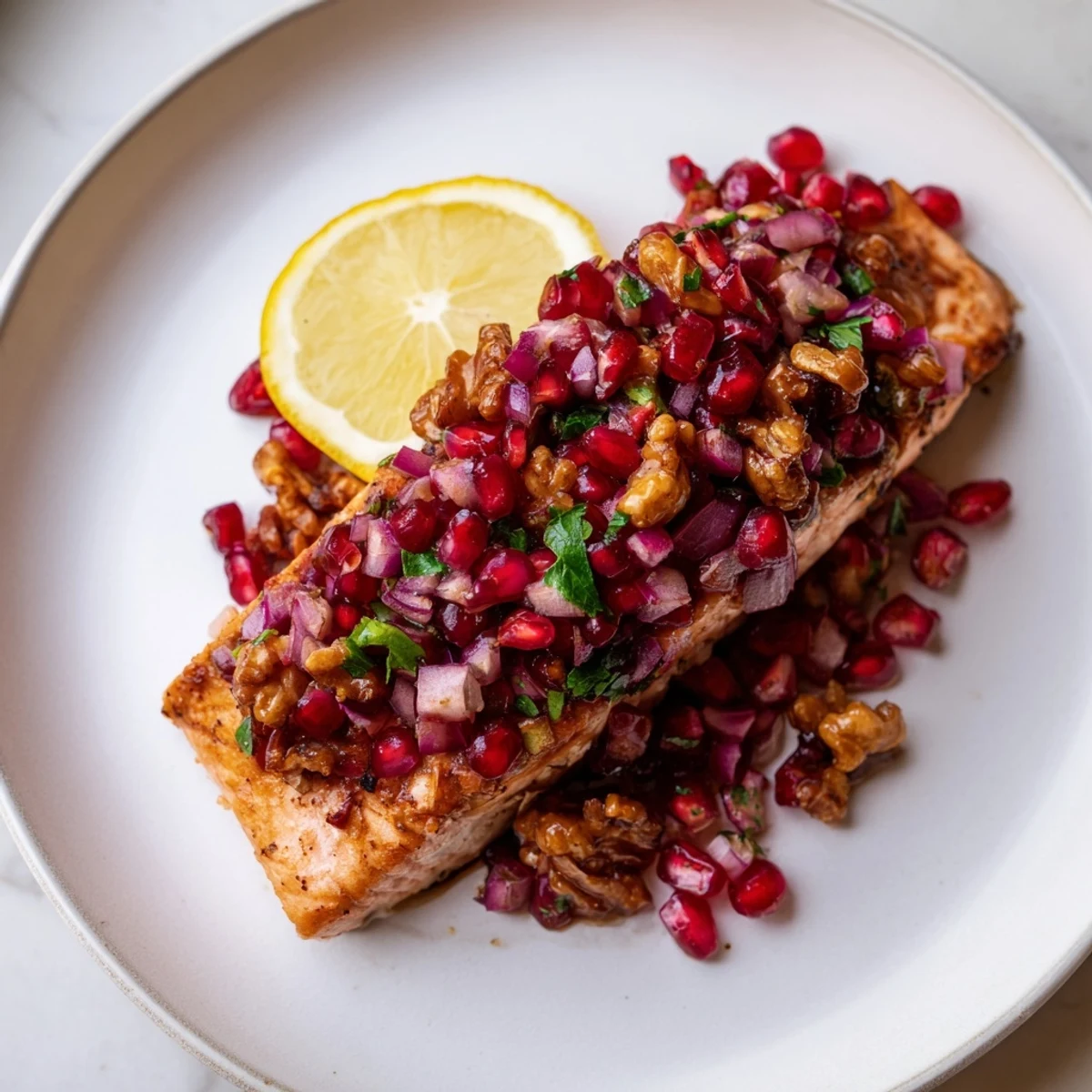
 This dish features tender salmon fillets gently baked to flaky perfection and topped with a vibrant pomegranate walnut salsa. The salsa blends juicy seeds, crunchy walnuts, fresh herbs, and a touch of citrus to brighten each bite. Simple preparation and wholesome ingredients make it an elegant, healthy option suitable for gluten-free and pescatarian diets. Ideal for a quick, flavorful main course enjoyed warm.
I wasn't planning to cook anything fancy that Tuesday evening, but the salmon at the market looked too good to ignore. I grabbed four fillets and a pomegranate on impulse, thinking I'd figure it out later. Back home, I cracked the pomegranate open over a bowl and watched the jewel-red seeds tumble out, and suddenly I knew exactly what I wanted to make.
The first time I served this to friends, one of them paused mid-bite and asked what was in the topping. When I said pomegranate and walnuts, she looked skeptical, then took another forkful and nodded approvingly. By the end of the night, she'd texted herself my ingredient list.
Ingredients
- Skinless salmon fillets: Look for thick center-cut pieces so they cook evenly and stay moist, and always smell them before buying to make sure they're ocean-fresh.
- Olive oil: Use regular olive oil for the salmon itself since it's going into a hot oven, saving the pricier extra virgin for the salsa where you'll actually taste it.
- Sea salt and black pepper: Flaky sea salt clings to the fish better than table salt and gives you those little bursts of seasoning.
- Lemon slices: They look pretty on top but also keep the salmon from drying out and add a subtle citrus perfume as it bakes.
- Pomegranate seeds: If you've never seeded a pomegranate, do it in a bowl of water and the arils sink while the white pith floats, making your life so much easier.
- Walnuts: Chop them rough and uneven so some pieces stay crunchy and others break down into the salsa for texture.
- Fresh flat-leaf parsley: The flat kind has more flavor than the curly stuff and doesn't taste like lawn clippings.
- Red onion: Dice it as fine as you can so it blends into the salsa without overpowering the delicate pomegranate.
- Extra virgin olive oil: This is where a fruity, peppery oil really shines and ties the whole salsa together.
- Lemon juice: Squeeze it fresh because bottled juice tastes flat and won't brighten the salsa the same way.
- Pomegranate molasses: It's optional but adds a sweet-tart depth that makes people wonder what your secret is.
Instructions
- Get the oven ready:
- Crank it to 400°F and line your baking sheet with parchment so nothing sticks. If you skip the parchment, a light brush of oil works just as well.
- Season the salmon:
- Lay the fillets on the sheet, drizzle them with olive oil, and sprinkle salt and pepper over the top like you mean it. Tuck a lemon slice on each fillet and slide the whole thing into the oven.
- Bake until just done:
- Give it 12 to 15 minutes depending on how thick your fillets are, watching for the flesh to turn opaque and flake easily with a fork. Overcooked salmon is a tragedy, so pull it when it's just barely done since it keeps cooking on the pan.
- Make the salsa:
- While the fish bakes, toss pomegranate seeds, walnuts, parsley, red onion, olive oil, lemon juice, pomegranate molasses if using, salt, and pepper in a bowl. Stir gently so the seeds don't burst and turn everything pink.
- Rest and serve:
- Let the salmon sit for a couple minutes after it comes out, then spoon the salsa generously over each piece. Serve it right away while the fish is warm and the salsa is cool.
 Pin This
 One evening I made this for my mom's birthday and she kept scraping her plate for every last walnut and pomegranate seed, then asked if there was more salsa in the kitchen. There wasn't, but watching her enjoy it that much made me feel like I'd actually pulled off something special.
How to Pick the Best Salmon
Press the fillet gently with your finger and it should bounce back, not leave a dent. The flesh should look glossy and smell like clean seawater, not fishy or sour. If you can, buy it the same day you plan to cook it so you don't have to worry about it sitting in your fridge.
Storing and Reheating Leftovers
Keep leftover salmon and salsa in separate containers in the fridge for up to two days. Reheat the fish gently in a low oven or eat it cold over greens, and spoon fresh salsa on top right before serving. Microwaving salmon turns it rubbery, so resist the urge.
Ways to Switch It Up
You can swap the walnuts for pistachios or pecans if that's what you have, or leave out the pomegranate molasses and add a pinch of sumac for a different kind of tang. I've also used this salsa on grilled chicken and roasted sweet potatoes with great results.
- Try adding a handful of crumbled feta to the salsa for a creamy, salty contrast.
- Grill the salmon instead of baking it if the weather's nice and you want a little char.
- Toss any leftover salsa with mixed greens and a drizzle of balsamic for an instant side salad.
 Pin This
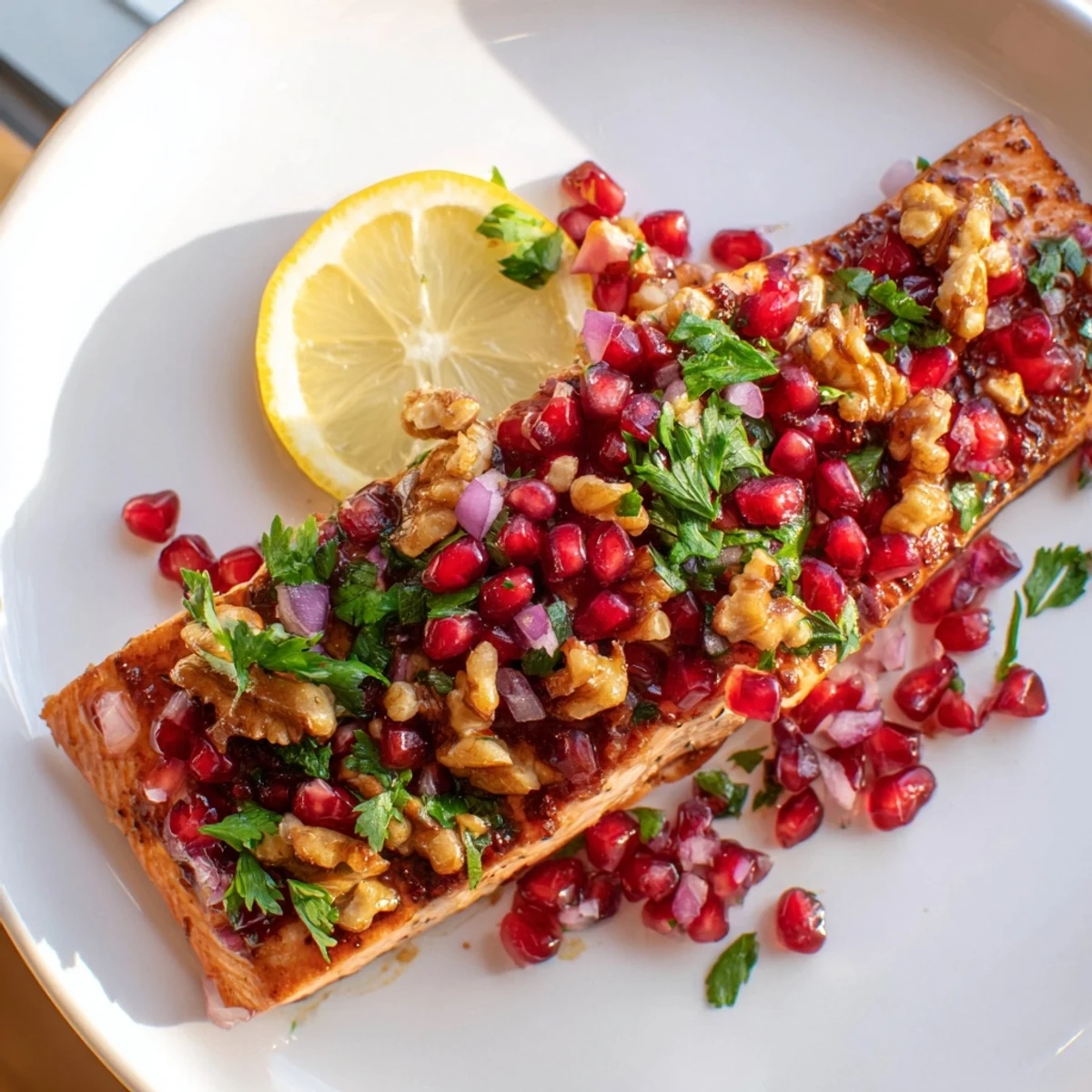
 This dish has become my go-to when I want something that feels elegant but doesn't require much effort or skill. The colors alone make it worth putting on the table, and every time I spoon that salsa over the salmon, I'm reminded why I grabbed that pomegranate on impulse.
Recipe FAQs
- → What temperature is best for baking the salmon?
-
Preheat the oven to 400°F (200°C) for perfectly baked salmon that stays moist and flaky.
- → Can I prepare the salsa ahead of time?
-
Yes, the pomegranate walnut salsa can be made up to 2 hours in advance and refrigerated to develop its flavors.
- → Are there suitable nut substitutes for the salsa?
-
Pecans or pistachios can replace walnuts to alter the texture and flavor while maintaining the salsa's crunch.
- → How can I enhance the salmon’s flavor before baking?
-
Marinate the salmon in lemon juice and olive oil for 15 minutes before baking for extra brightness and richness.
- → What dishes pair well with this salmon and salsa?
-
A crisp Sauvignon Blanc or a light Pinot Noir complements the fresh and nutty flavors of the salmon and salsa.