 Pin This
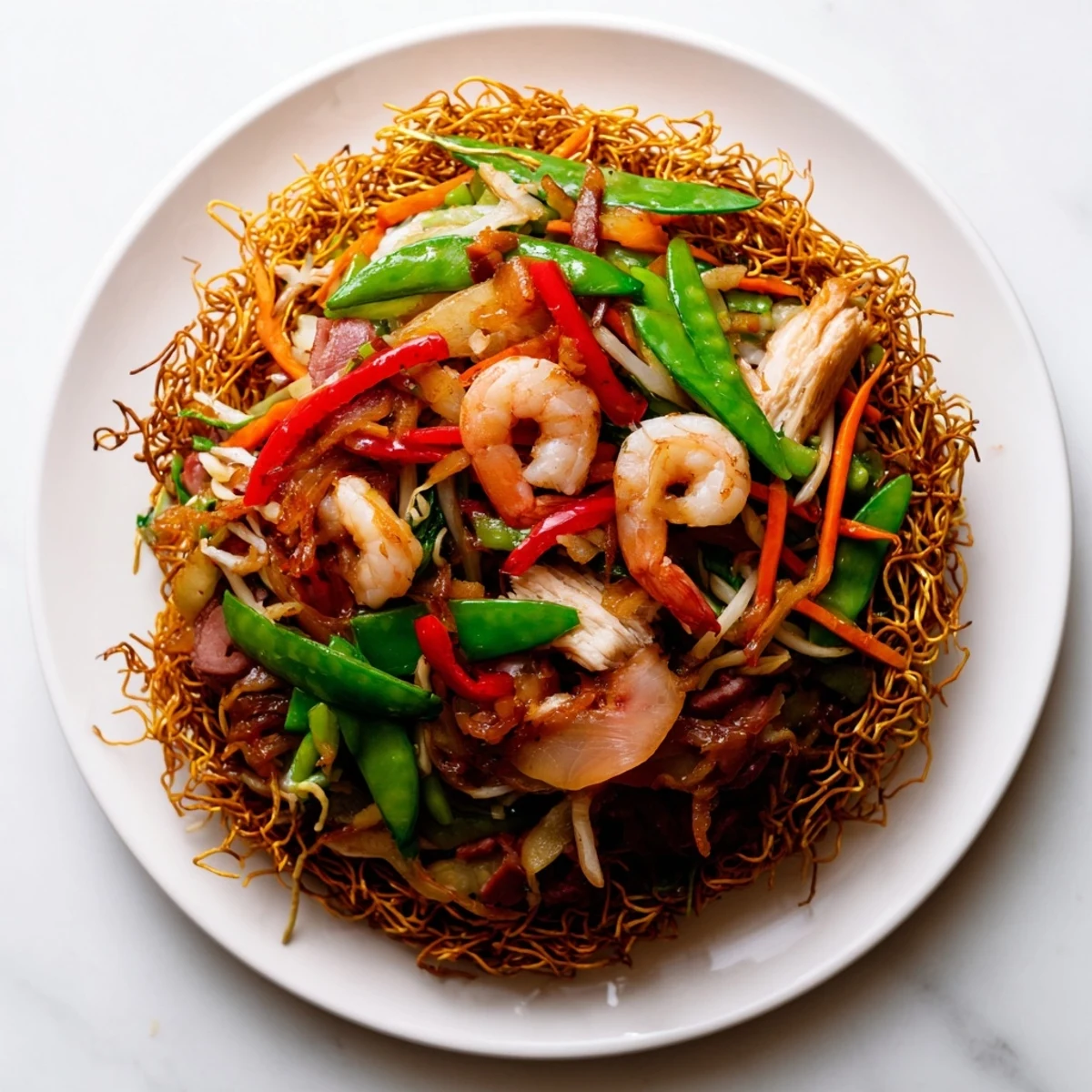
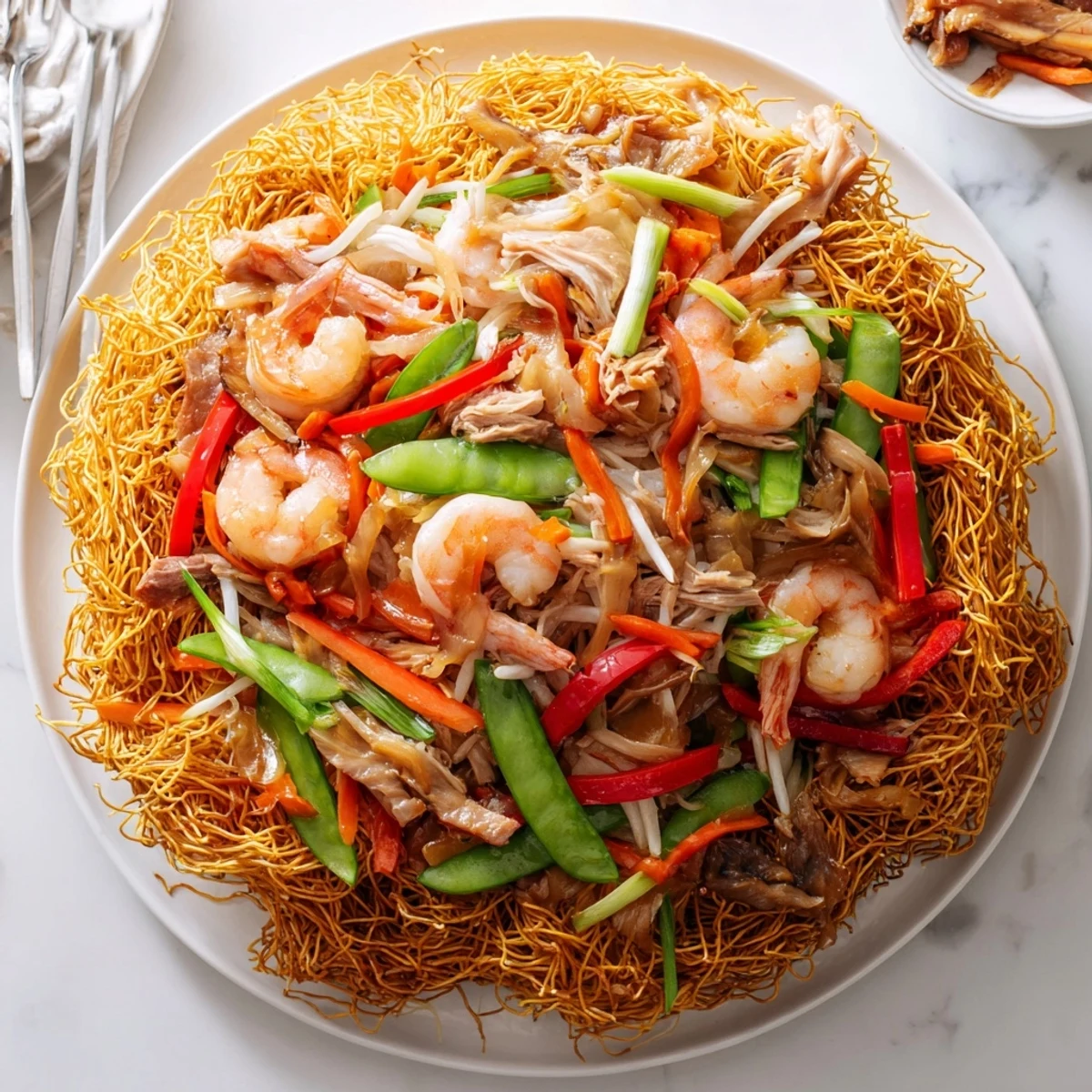
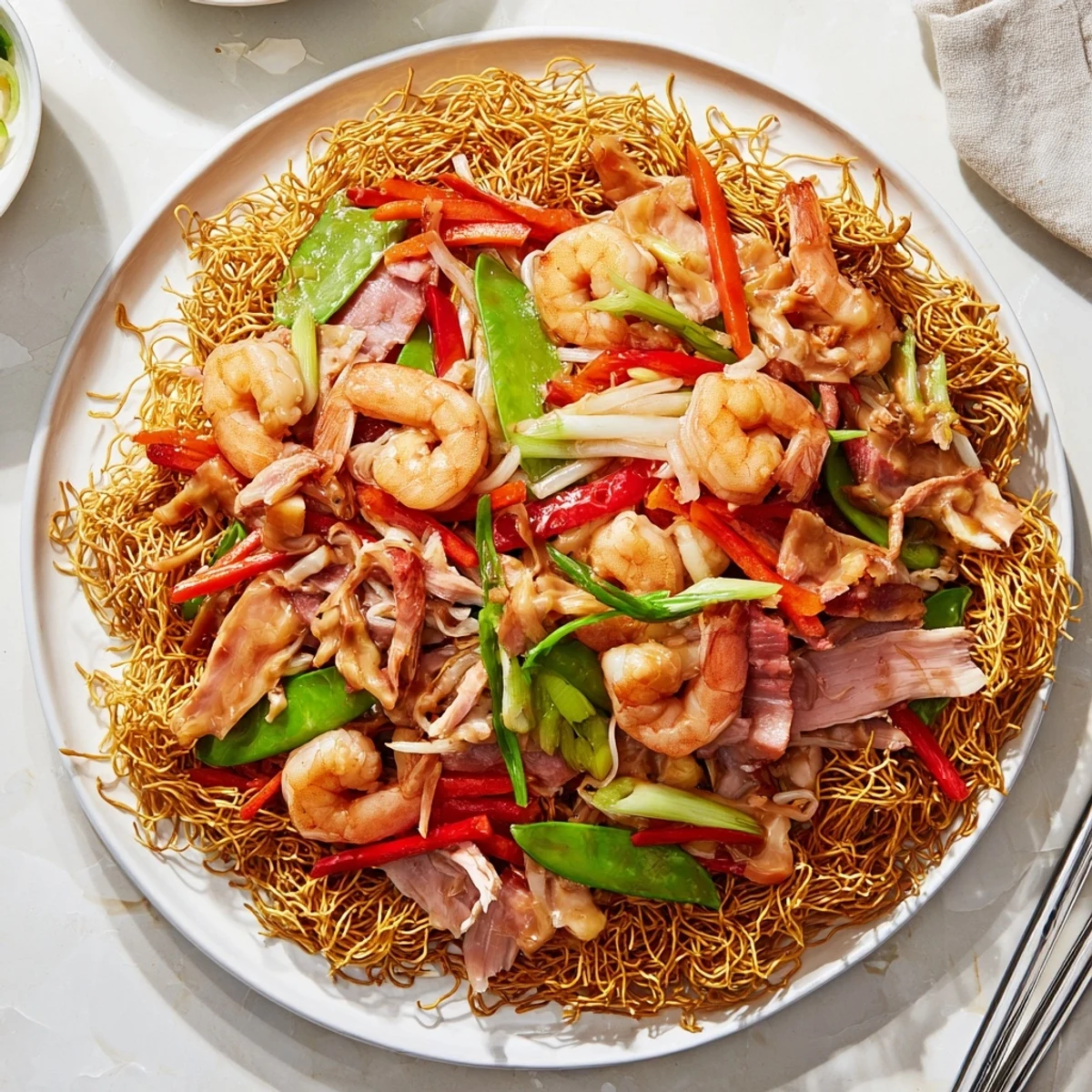
 This beloved Cantonese dish features crispy pan-fried egg noodles crowned with a vibrant medley of marinated chicken, plump shrimp, char siu pork, and crisp-tender vegetables. The crowning glory is a glossy, umami-rich sauce bringing everything together in perfect harmony.
The technique involves blanching fresh egg noodles, then pan-frying them until golden and crunchy on both sides. Meanwhile, the protein and vegetables are quickly stir-fried to preserve their texture and color before being enveloped in a savory sauce made with soy sauce, oyster sauce, and Shaoxing wine.
What makes this chow mein special is the contrast between the crispy noodle base and the tender, saucy topping. Each bite delivers satisfying crunch, succulent meat, and fresh vegetables in a deeply flavorful sauce that captures the essence of Cantonese cuisine.
The first time I watched my grandmother make chow mein, I was mesmerized by how she transformed a tangle of soft noodles into a golden, crispy foundation while simultaneously orchestrating a symphony of proteins and vegetables in her well-seasoned wok. The sound of the noodles hitting the hot oil, that satisfying sizzle that echoed through her tiny kitchen, became something I chased in my own cooking for years. Now, whenever I slide those blistered noodles onto a platter and hear that familiar crunch, I'm transported back to standing on a stool beside her, learning that patience and high heat are the secret ingredients nobody writes down.
Last winter, my roommate came home from a terrible shift at the hospital, shoulders slumped and spirit completely drained. I'd just finished making this chow mein, the way my grandmother taught me, with that foundation of crispy noodles that still holds up even under the weight of all that savory sauce. Watching her face light up after that first satisfying crunch, the way she said 'this tastes like something youd get at a proper restaurant,' reminded me why I fell in love with cooking in the first place. Food isnt just sustenance sometimes its the thing that pulls someone back to themselves.
Ingredients
- Fresh egg noodles: These are non-negotiable for the authentic texture and that perfect golden crisp when pan-fried
- Vegetable oil: A neutral oil with a high smoke point is essential for getting those noodles properly crispy without burning
- Chicken breast and shrimp: This dual protein approach gives you the best of both worlds, tender meat and sweet seafood notes
- Char siu: Chinese BBQ pork adds that authentic sweet-savory depth, though roast pork works in a pinch
- Carrot and red bell pepper: These provide color and sweetness that balances the savory sauce elements
- Bean sprouts and snow peas: Essential for that fresh crunch that cuts through the rich sauce
- Light soy sauce: This provides the fundamental salty base without overwhelming the dish with darkness
- Oyster sauce: The secret ingredient that adds umami richness and a subtle velvety texture
- Shaoxing wine: This Chinese cooking wine adds complexity and helps deglaze the wok beautifully
- Sesame oil: Just a teaspoon at the end adds that unmistakable aromatic finish
- Cornstarch slurry: This is what transforms the sauce from thin liquid to glossy coating
Instructions
- Prep your proteins:
- Toss chicken and shrimp with soy sauce, cornstarch, and white pepper. Let them marinate for 10 minutes while you prep everything else, this simple step makes all the difference in texture.
- Blanch the noodles:
- Drop fresh noodles into boiling water for just 1-2 minutes, then drain and pat them dry. Any excess water here will prevent them from crisping properly later.
- Create the noodle cake:
- Heat oil in your wok over medium-high heat, spread noodles evenly, and let them cook undisturbed for 3-4 minutes until golden. Flip carefully and repeat on the other side, then transfer to your serving platter.
- Stir-fry the proteins:
- Add fresh oil to the wok and cook chicken until nearly done, then add shrimp until pink. Toss in char siu, carrot, bell pepper, and snow peas, stir-frying for 2-3 minutes.
- Add fresh vegetables:
- Throw in bean sprouts and spring onions for just 1 minute, you want them to stay crisp and vibrant, not wilted.
- Build the sauce:
- Pour in soy sauce, oyster sauce, wine, sugar, sesame oil, and chicken stock. Let it bubble up slightly before stirring in your cornstarch mixture, watching it transform into glossy perfection.
- Bring it all together:
- Pour the entire bubbling mixture over your crispy noodle cake and serve immediately, that first crunch against the tender toppings is the moment you've been working toward.
 Pin This
 My partner's mother, who grew up in Guangzhou, told me that the best chow mein she ever had was from a street vendor who cooked his noodles in a wok that had been seasoned for forty years. She says the secret wasn't just the technique but the memory embedded in that pan, every dish adding to the one before. Sometimes I wonder if that's why this recipe never tastes exactly the same twice, and why that's actually the most authentic thing about it.
Getting That Perfect Noodle Crunch
The difference between good chow mein and great chow mein comes down to that crispy noodle foundation. Don't be tempted to crowd your pan or flip too often, let the heat do its work and develop that golden crust. I've learned that medium-high heat is better than screaming high, giving you control while still delivering that restaurant-quality crunch.
Building Your Sauce Like a Pro
Professional Cantonese cooks always mix their sauce components in a bowl before adding them to the wok, and once you try this method, you'll understand why. It prevents any cornstarch clumping and ensures every ingredient is perfectly distributed. The sauce should coat the back of a spoon, not be thick like gravy, so don't overdo the cornstarch.
Vegetable Timing Secrets
Different vegetables need different heat treatment, and understanding this transforms your final dish. Hard vegetables like carrots go in early, while delicate bean sprouts need just a minute at the end. This layering approach means every bite has perfectly cooked textures, no mushy peas or raw carrots.
- Cut all your vegetables to similar sizes so they cook evenly
- Keep your wok moving constantly once the vegetables hit the heat
- Never cover the wok during stir-frying, it creates steam and kills the crisp
 Pin This
 The best chow mein I ever made was on a Tuesday night with whatever I had in the fridge, proving that technique matters more than perfection. Trust your instincts, listen to your wok, and don't forget to enjoy the process.
Recipe FAQs
- → What makes Cantonese chow mein different from other noodle dishes?
-
Cantonese chow mein stands out for its crispy pan-fried noodle base, which creates a delightful textural contrast with the tender stir-fried topping. The sauce is also lighter and more aromatic than other regional variations.
- → Can I make the noodles ahead of time?
-
The crispy noodles are best served immediately to maintain their crunch. However, you can prep all ingredients in advance—the blanched noodles, marinated proteins, and chopped vegetables—to make assembly quick when you're ready to cook.
- → What's the best way to achieve crispy noodles?
-
After blanching, drain the noodles thoroughly and pat them dry. Use a generous amount of oil and spread the noodles evenly in the pan. Let them cook undisturbed until golden before flipping—this creates that signature crispy texture.
- → How can I adapt this for vegetarians?
-
Simply omit the chicken, shrimp, and char siu. Replace them with firm tofu cubes, more vegetables like mushrooms and bok choy, and use vegetable stock instead of chicken stock. The cooking technique remains the same.
- → What vegetables work best in this dish?
-
Traditional choices include bean sprouts for crunch, bell peppers for color, snow peas for sweetness, and carrots for texture. You can also add bok choy, mushrooms, or baby corn depending on what's available.
- → Is there a substitute for Shaoxing wine?
-
Dry sherry makes an excellent substitute for Shaoxing wine. Alternatively, you can use Chinese rice wine or omit it entirely, though the dish will lose some of its authentic depth of flavor.