
 Pin This
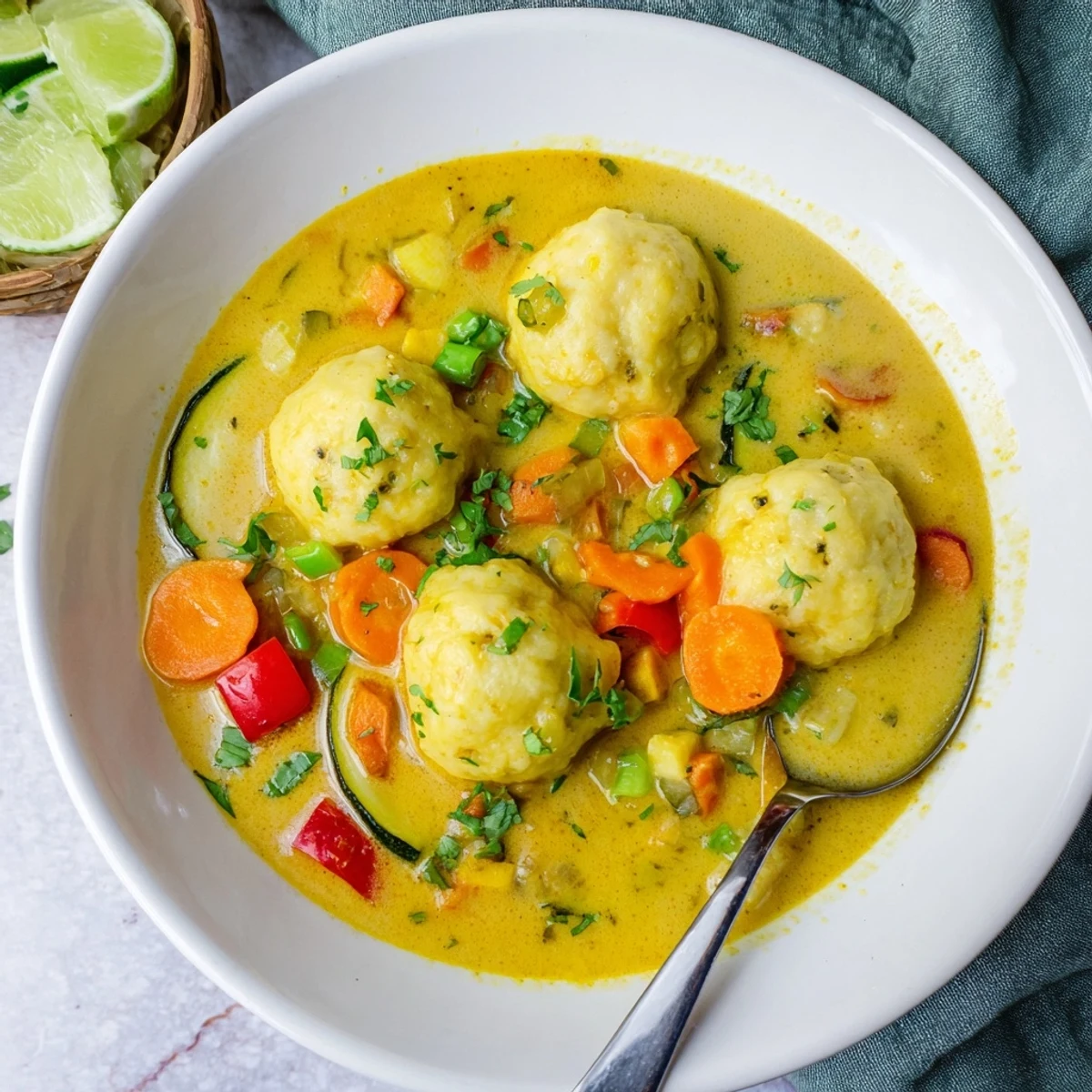
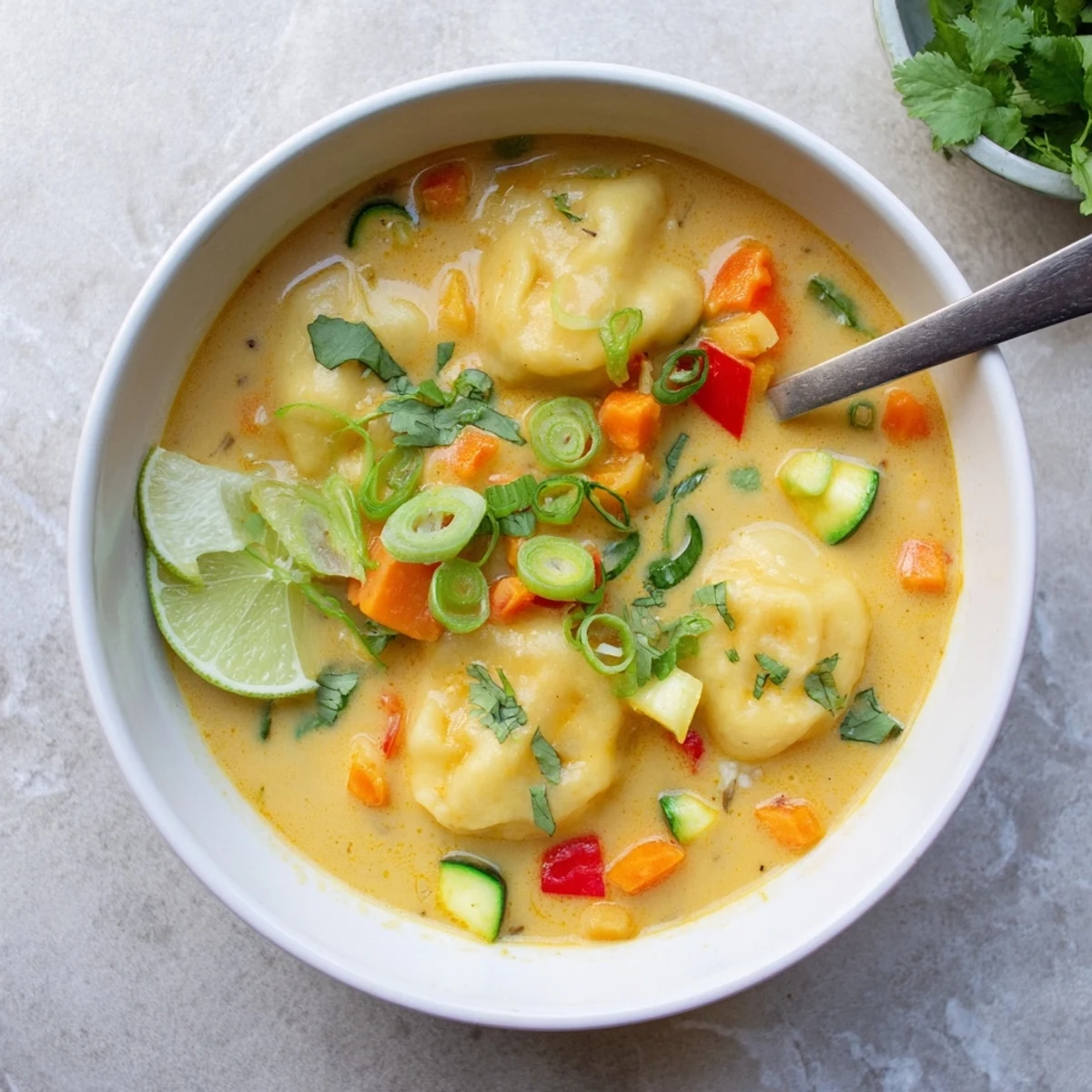
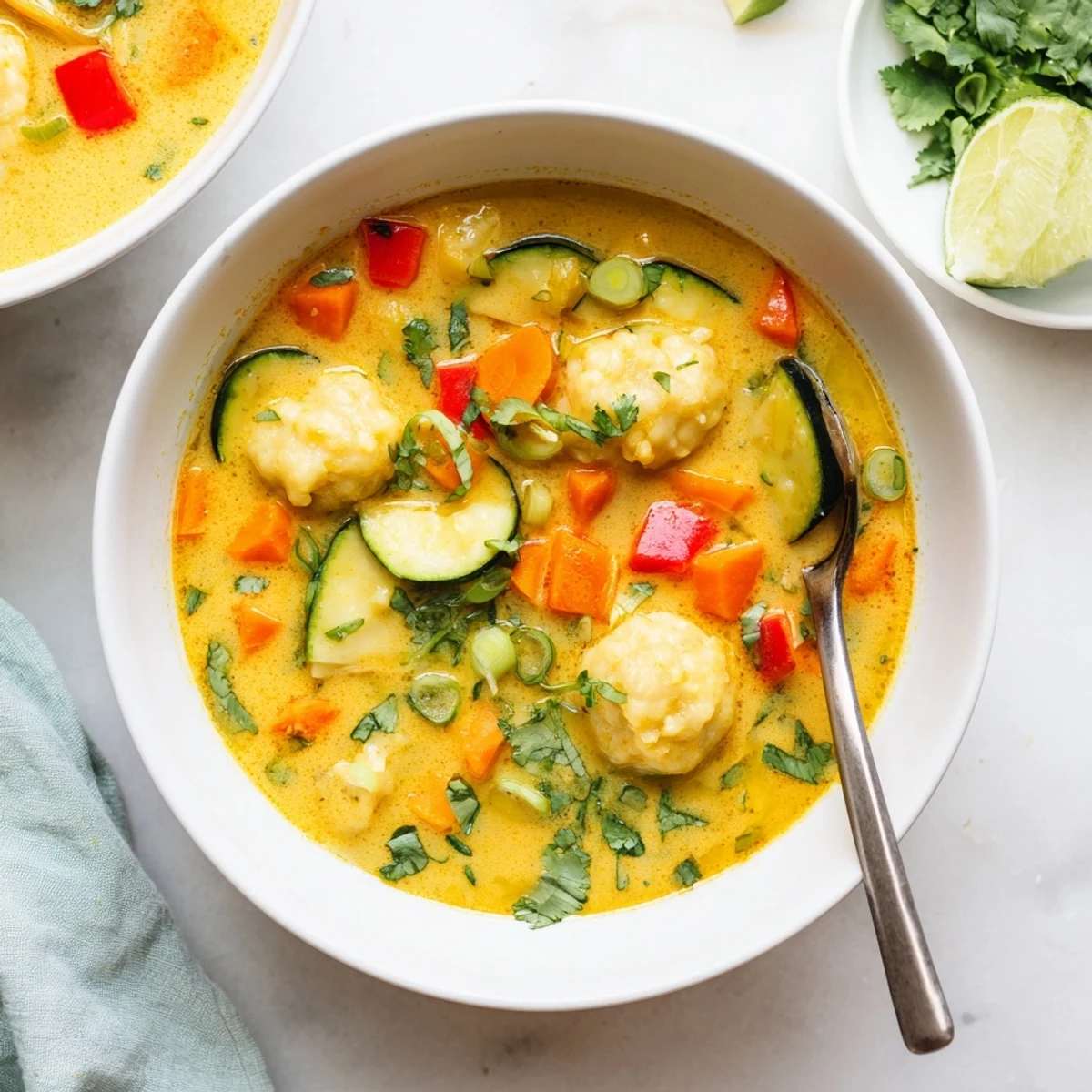
 This warming Southeast Asian-inspired soup combines velvety coconut milk with aromatic yellow curry and turmeric, creating a richly spiced broth that's both comforting and invigorating. The tender, pillowy dumplings steam directly in the simmering soup, soaking up the fragrant flavors while maintaining a light, fluffy texture. Loaded with colorful vegetables like carrots, bell peppers, and zucchini, each bowl offers a satisfying balance of creamy broth, tender veggies, and soft dumplings. Ready in under an hour, this vegetarian-friendly dish easily adapts to vegan diets and welcomes protein additions like tofu or chickpeas. Perfect for chilly evenings or when you need nourishing comfort food that doesn't require hours of preparation.
The first time I made coconut curry soup, it was supposed to be a quick weeknight dinner after a particularly brutal Monday. I ended up standing over the pot, breathing in the cloud of curry and ginger that filled my tiny apartment, forgetting entirely about being tired. Something about that coconut creaminess curling into the broth felt like a blanket for my insides.
Last winter, my roommate walked in while I was dropping dumpling batter into the bubbling soup. She stood watching, skeptical about dumplings in curry, until I handed her a bowl five minutes later. She ate it standing up at the counter, barely coming up for air, and asked if I could make it every Sunday from then on.
Ingredients
- Vegetable oil: Creates the foundation for sautéing your aromatics, though coconut oil works beautifully if you want to lean into the tropical notes.
- Onion, garlic, and ginger: This trifecta builds the aromatic base—mince the ginger fine so it melts into the broth rather than forming chewy bits.
- Yellow curry powder and turmeric: Bloom these spices in hot oil for thirty seconds to wake up their essential oils, otherwise theyll taste dusty and muted.
- Carrot, bell pepper, and zucchini: Choose vegetables that hold their shape during simmering—soft cubes that surrender without turning to mush.
- Full-fat coconut milk: The fat content carries the curry flavors better than light versions, creating that luxurious silky finish.
- Vegetable broth: Use a quality broth you would drink on its own, since it provides the liquid backbone for everything else.
- Soy sauce and lime juice: These create the salty-acidic balance that lifts the rich coconut and prevents the soup from feeling too heavy.
- All-purpose flour: Forms the structure of the dumplings—gluten-free blends work but may yield slightly denser results.
- Baking powder: Essential for lift, giving the dumplings their airy puff as they steam in the broth.
- Fresh cilantro: Fold chopped cilantro directly into the dumpling batter for pockets of herbal brightness throughout.
Instructions
- Build your flavor foundation:
- Heat oil in your large pot over medium heat, then add chopped onion and cook until it turns translucent and soft, about three minutes. Stir in minced garlic and grated ginger, letting them sizzle for just one minute until the raw smell dissipates.
- Wake up the spices:
- Add curry powder and turmeric directly to the pot, stirring constantly for thirty seconds until theyre fragrant and fully bloomed in the hot oil. Toss in the sliced carrot, diced bell pepper, and zucchini, sautéing briefly for two to three minutes to coat everything in those toasted spices.
- Create the soup base:
- Pour in the coconut milk and vegetable broth, then stir in soy sauce, lime juice, sugar, salt, and pepper. Bring everything to a gentle boil while you prepare the dumplings, giving the vegetables a head start on becoming tender.
- Mix the dumpling batter:
- Whisk together flour, baking powder, salt, and chopped cilantro in a bowl. Add milk and oil, mixing gently with a spoon just until combined—overworking develops gluten and makes dumplings tough instead of tender.
- Drop and steam the dumplings:
- Once the soup reaches a boil, reduce heat to a steady simmer and drop spoonfuls of batter directly into the liquid, about one tablespoon each. Cover the pot tightly and resist all temptation to lift the lid, letting the dumplings steam for twelve to fifteen minutes until puffed and cooked through.
- Finish and serve:
- Taste the soup and adjust seasoning if needed, then ladle hot portions into bowls. Top with fresh cilantro, lime wedges, sliced green onions, and a pinch of red chili flakes if you like warmth.
 Pin This
 This soup has become my go-to when friends need feeding but I dont want to spend hours hovering over the stove. Theres something about watching people lift the lid off their bowls, steam curling up into their faces, that feels like giving them a hug they can eat.
Choosing Your Vegetables
Ive learned that dense root vegetables like sweet potatoes or butternut squash need an extra few minutes of simmering before dropping the dumplings, otherwise theyre still crunchy when the dumplings are done. Softer vegetables like spinach or peas can be stirred in during the last two minutes of cooking, preserving their bright color and delicate texture.
Making It Your Own
Sometimes I add cubed firm tofu or drained chickpeas during the simmering stage if I want extra protein, and both ingredients hold up beautifully without becoming mealy. For spice lovers, a spoonful of red curry paste stirred in with the powder creates deeper heat, while fresh Thai basil added at the end brings an unexpected licorice-like sweetness that plays nicely against the coconut.
Batch Cooking and Storage
The soup base freezes exceptionally well, though I always store it separately from any dumplings since reheating turns them tough. When meal prepping, I make double the soup portion and freeze it in quart containers, then cook fresh dumplings the night I plan to serve it for that just-made texture that makes this recipe special.
- Drop fresh dumpling batter into reheated frozen soup and simmer covered for the same twelve to fifteen minutes.
- Leftover cooked dumplings keep for one day in the refrigerator but lose their puff—reheat gently in broth rather than the microwave.
- If you must freeze everything together, undercook the dumplings by two minutes so they finish when reheated.
 Pin This
 Theres something deeply satisfying about dumplings bobbing in a fragrant broth, little clouds of comfort promising everything will be okay after all.
Recipe FAQs
- → Can I make the dumplings gluten-free?
-
Yes, simply substitute the all-purpose flour with a gluten-free flour blend and use tamari instead of soy sauce. The texture remains light and tender.
- → How do I prevent dumplings from becoming dense?
-
Avoid overmixing the dumpling batter—stir just until combined. Also, don't lift the lid while they're simmering, as the trapped steam is essential for proper rising.
- → Can I add protein to this soup?
-
Absolutely. Cubed tofu, cooked chickpeas, or shredded chicken work beautifully. Add them during step 5 so they heat through while the soup simmers.
- → How long does this soup keep in the refrigerator?
-
Stored in an airtight container, the soup base keeps for 4-5 days. However, dumplings are best enjoyed fresh as they can become soggy when reheated.
- → Can I freeze this soup?
-
Freeze the soup base without dumplings for up to 3 months. Thaw overnight in the refrigerator, reheat, and make fresh dumplings when ready to serve.
- → What vegetables work best in this curry soup?
-
Carrots, bell peppers, and zucchini are featured, but sweet potatoes, butternut squash, green beans, or spinach also complement the coconut curry flavors beautifully.