
 Pin This
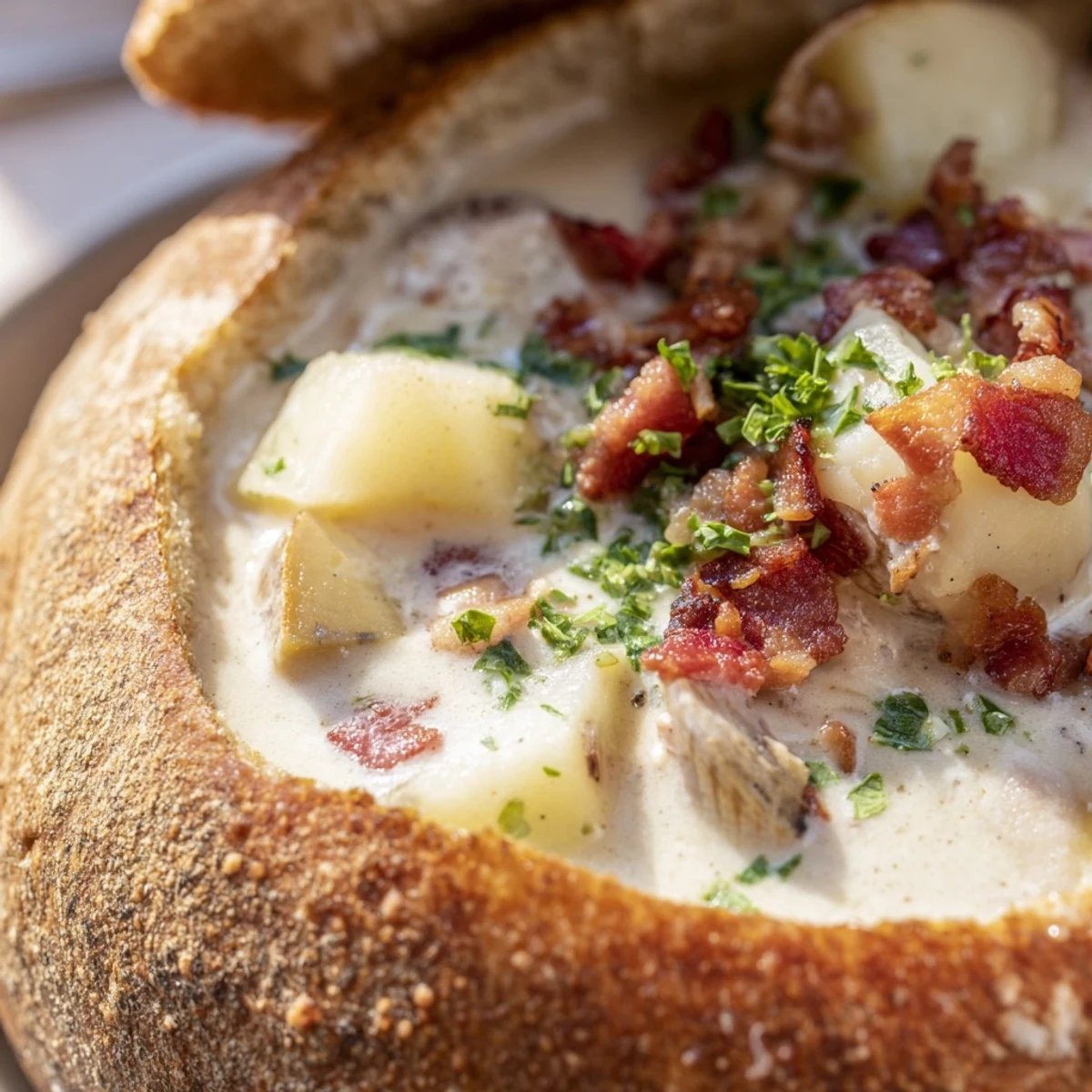
 Enjoy a rich, smoky New England-style chowder loaded with tender clams, crisp bacon, and creamy Yukon Gold potatoes. This hearty broth, thickened to perfection and infused with herbs, is served inside a warm, crusty sourdough bowl for the ultimate comforting dining experience.
My apartment smelled like a wharf when I first attempted clam chowder in a bread bowl, and I haven't looked back since. It was late November, the kind of evening where you crave something warm enough to hold with both hands, and a friend had just texted about a chowder dinner happening in Boston the week after. I was determined to prove I could make something worthy of that table, so I stood in my kitchen, surrounded by clam juice and cream, learning that comfort food isn't actually about perfection—it's about letting yourself get a little messy with butter and bacon fat.
I remember my partner's eyes when they saw that first spoonful of chowder break through the bread bowl's crust, how the steam rose between us at the kitchen counter. That's when I knew this recipe would become one of those things I'd make over and over, each time a little more confident with the roux, each time a little less worried about the timing.
Ingredients
- Canned chopped clams (500 g / 1 lb): Buy good quality if you can; the briny juice is your foundation, so don't drain them into the sink—that liquid is liquid gold for the chowder base.
- Reserved clam juice (250 ml / 1 cup, plus bottled if needed): This is where the ocean flavor lives, so taste it as you build the soup and adjust with bottled clam juice if your canned clams gave you less than expected.
- Thick-cut bacon (120 g / 4 oz, diced): The smokiness matters here; choose bacon that actually tastes like something, because it's the backbone of your flavor.
- Medium yellow onion, finely diced: Don't rush the sauté; let it turn truly translucent and soft before moving on, which is where the sweetness emerges.
- Celery stalks (2), diced: This isn't just filler; it adds a subtle earthiness that balances the brine and cream.
- Yukon Gold potatoes (2 medium, about 300 g): Their buttery texture holds up beautifully in cream without turning mealy, and they absorb the flavors around them.
- Whole milk (480 ml / 2 cups) and heavy cream (240 ml / 1 cup): The ratio matters—too much cream feels heavy, too much milk and it tastes thin, so this balance is intentional.
- Unsalted butter (2 tbsp): This is in addition to the bacon fat, because you want enough richness to make the roux silky.
- All-purpose flour (2 tbsp): This thickens the chowder gently; if you cook the roux long enough, it loses that raw flour taste.
- Garlic (2 cloves, minced): Add it after the onions soften so it doesn't brown and turn bitter.
- Bay leaf (1) and dried thyme (1/2 tsp): These simmer with the potatoes to build a quiet herbal undertone that ties everything together.
- Sourdough bread loaves (4 small round): The structure matters—small rounds hollow out more easily than large ones, and sourdough's tang plays beautifully against the broth.
- Fresh parsley, chopped (optional): This is your last-minute brightness; it cuts through the richness and reminds you there's a garden somewhere beyond this creamy bowl.
Instructions
- Prepare your bread bowls first:
- Slice the top quarter off each sourdough loaf and set it aside. Using a small sharp knife or your fingers, carefully hollow out the center, leaving about half an inch of bread around the edges so the bowl doesn't collapse when the hot chowder hits it.
- Get the bacon started:
- In a large pot or Dutch oven over medium heat, cook the diced bacon until it's deeply crisp and the fat is rendered. Remove it with a slotted spoon and set it on a paper towel, but leave about 2 tablespoons of that precious bacon fat in the pot—this is your flavor base.
- Build the aromatics:
- Add butter to the bacon fat, then toss in your diced onion and celery. Sauté for 4 to 5 minutes, stirring occasionally, until everything softens and the onion turns translucent and sweet-smelling. Add the minced garlic and cook for just 1 minute more, until it's fragrant.
- Make your roux:
- Sprinkle flour over the vegetables and stir constantly for 2 minutes, scraping the bottom of the pot to make sure nothing sticks. The flour will cook into a paste that thickens your soup and loses that raw grain taste.
- Introduce the clam juice:
- Slowly whisk in your reserved clam juice plus enough bottled clam juice to reach 360 ml total, stirring to smooth out any lumps in the roux. Add the diced potatoes, bay leaf, and thyme, then bring everything to a simmer and cover the pot.
- Simmer the potatoes:
- Cook covered for 12 to 15 minutes, until the potatoes are completely tender when you pierce them with a fork. This is when the thyme perfumes everything.
- Add the cream and clams:
- Pour in the milk and heavy cream, stirring gently as it warms back to a gentle simmer—never a rolling boil, because high heat can break the dairy. Stir in the clams and about half of your cooked bacon, then simmer for 5 to 7 minutes, stirring now and then.
- Season and finish:
- Remove the bay leaf, taste the chowder, and adjust salt and pepper to your preference. Remember that the clams and bacon are already salty, so start cautious.
- Serve in the bread bowls:
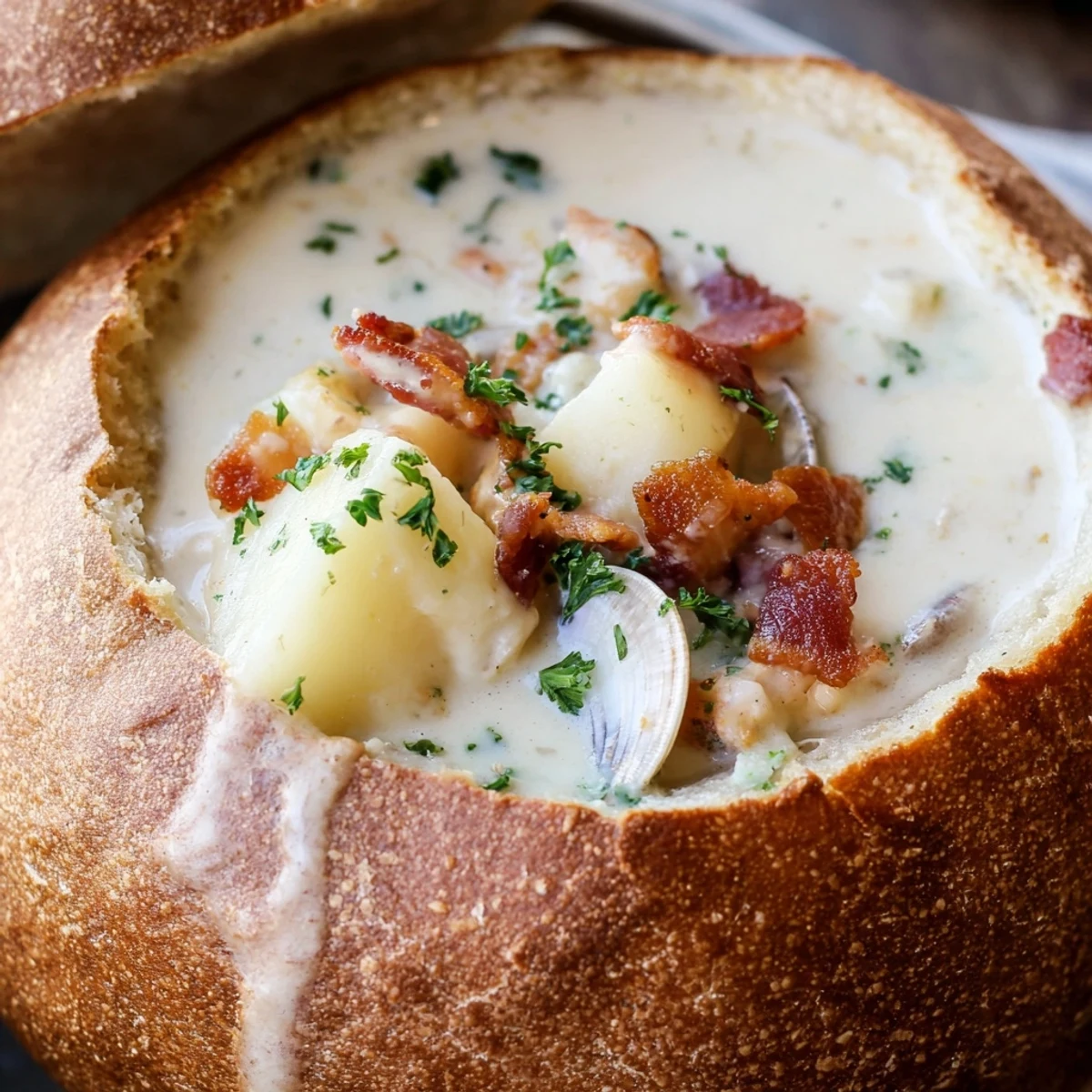
- Ladle the chowder directly into each hollowed bread bowl, then garnish with the remaining crispy bacon and fresh parsley if you're using it. Stand the reserved bread top against the rim so it soaks up the broth and becomes edible too.
 Pin This
 There's something almost ceremonial about ladling this chowder into a bread bowl in front of someone, watching them lift that spoon, knowing they're about to taste the ocean and comfort at the same time. That's when you realize you've made something that matters.
The Bread Bowl Question
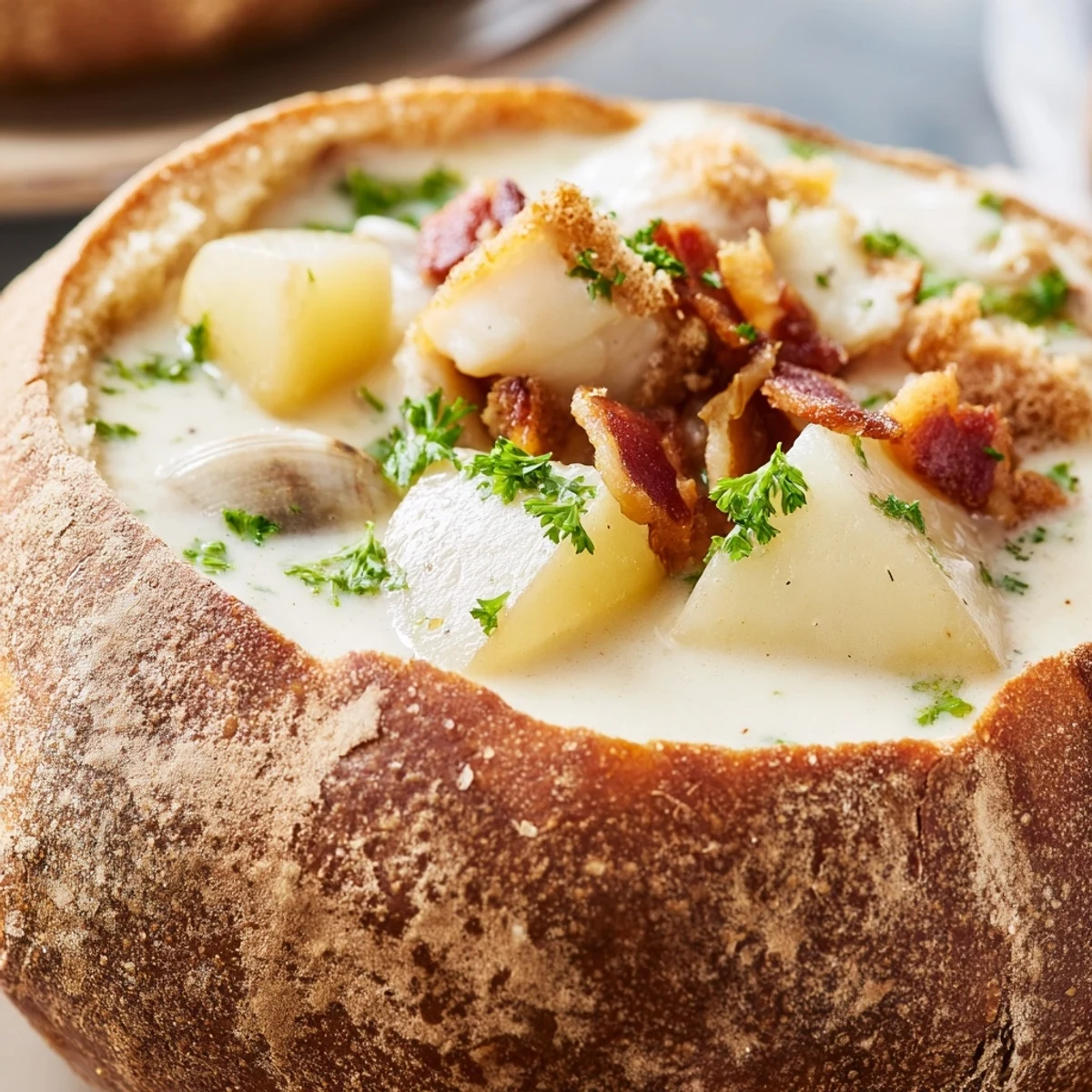
I used to think bread bowls were purely decorative until I actually paid attention to what happens when sourdough sits in warm, salty broth. The crust softens, the interior absorbs all that creamy clam flavor, and suddenly you're breaking off pieces of bread that taste infinitely better than the bread you started with. If you can't find small round sourdough loaves, larger oval loaves work fine, but they're harder to hollow and less dramatic. The key is leaving enough bread structure that it doesn't collapse when the hot soup touches it, but thin enough that it softens and becomes edible rather than chewy.
Why Clam Chowder Feels Like Home
This dish works because every component has a job and they all work together without fighting. The bacon is salty and smoky, the potatoes are starchy and grounding, the clams are briny and tender, and the cream brings everything into focus without making it heavy. It's a rhythm rather than a recipe, and once you understand the steps, you can make it by feel. The bay leaf and thyme are there to remind you that cooking is about more than ingredients on a list—it's about remembering what you love about being in a kitchen, making something warm for yourself and the people around you.
Building Your Own Variations
Once you've made this classic version, you can start playing. A splash of dry white wine added right after the aromatics soften brings a subtle brightness that doesn't announce itself but makes people ask what that flavor is. Smoked turkey instead of bacon keeps things lighter without losing that smokiness. Even a handful of diced fennel bulb cooked with the onions adds a sweetness that echoes the clams. The skeleton of the recipe stays the same—roux, potatoes, clam juice, cream, clams—and everything else is just conversation.
- A pinch of cayenne or hot sauce at the end adds interest without heat if you prefer things mild.
- If you make this gluten-free, use cornstarch instead of flour for the roux in the same quantity, whisking it in smoothly.
- Leftover chowder thickens in the refrigerator but tastes even better the next day when the flavors have melded overnight.
 Pin This
 This is the kind of meal that makes you feel like you've done something generous, even though you're mostly just letting time and heat do the work. Make it, serve it in those bread bowls, and watch what happens.
Recipe FAQs
- → Can I use fresh clams instead of canned?
-
Yes, steam about 2 lbs of fresh clams in water until they open. Chop the meat and use the cooking liquid as your clam juice.
- → How do I keep the milk from curdling?
-
Avoid boiling the chowder after adding the milk and cream. Keep the heat at a low gentle simmer to maintain a smooth texture.
- → Can I make this gluten-free?
-
Substitute the all-purpose flour with a 1:1 gluten-free flour blend and ensure your sourdough bowl is certified gluten-free.
- → What type of potato works best?
-
Yukon Gold potatoes are ideal because they hold their shape well during simmering, but Russets can be used for a thicker result.
- → Can I substitute the bacon?
-
Yes, smoked turkey or pancetta makes excellent alternatives that still provide the necessary smoky depth of flavor.