
 Pin This
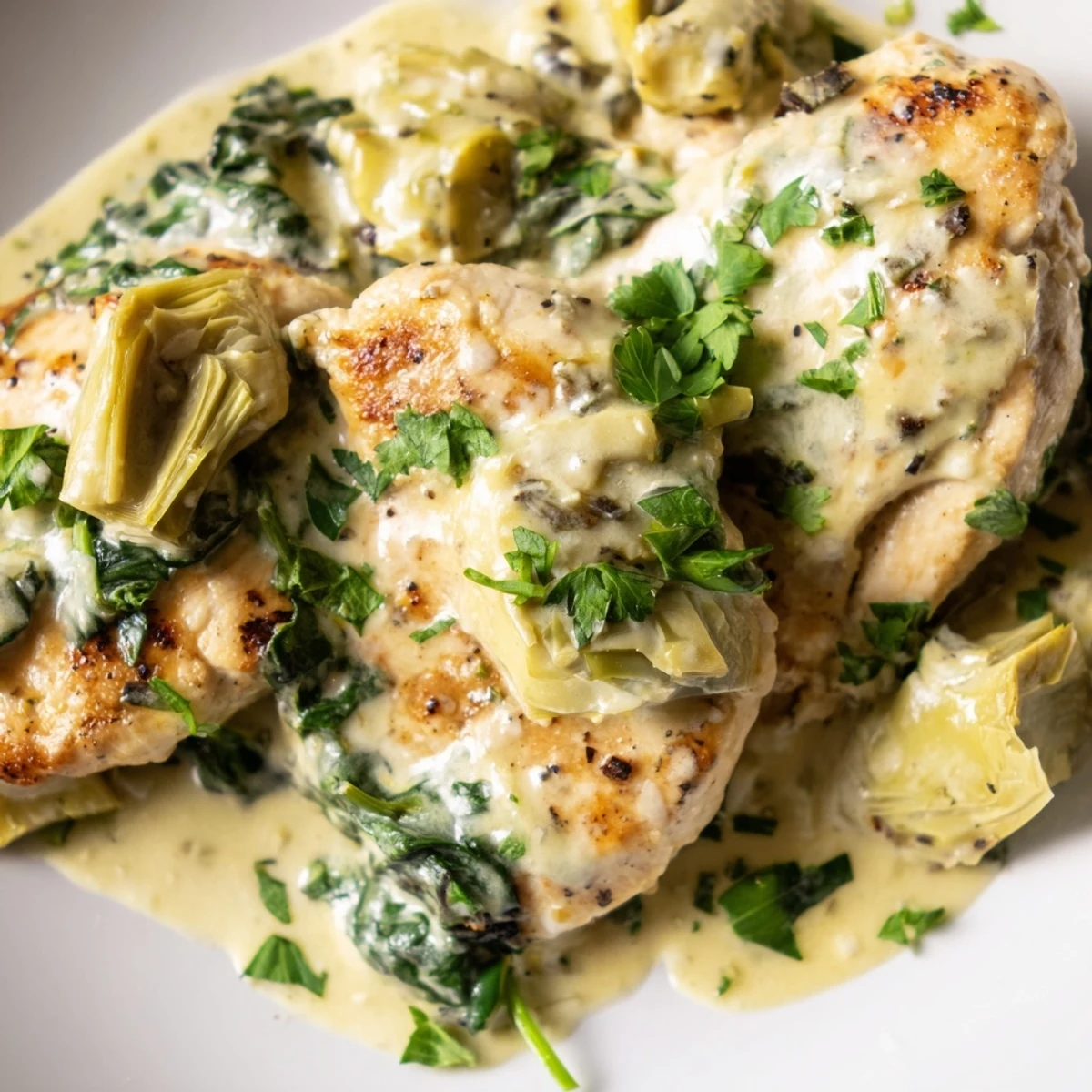
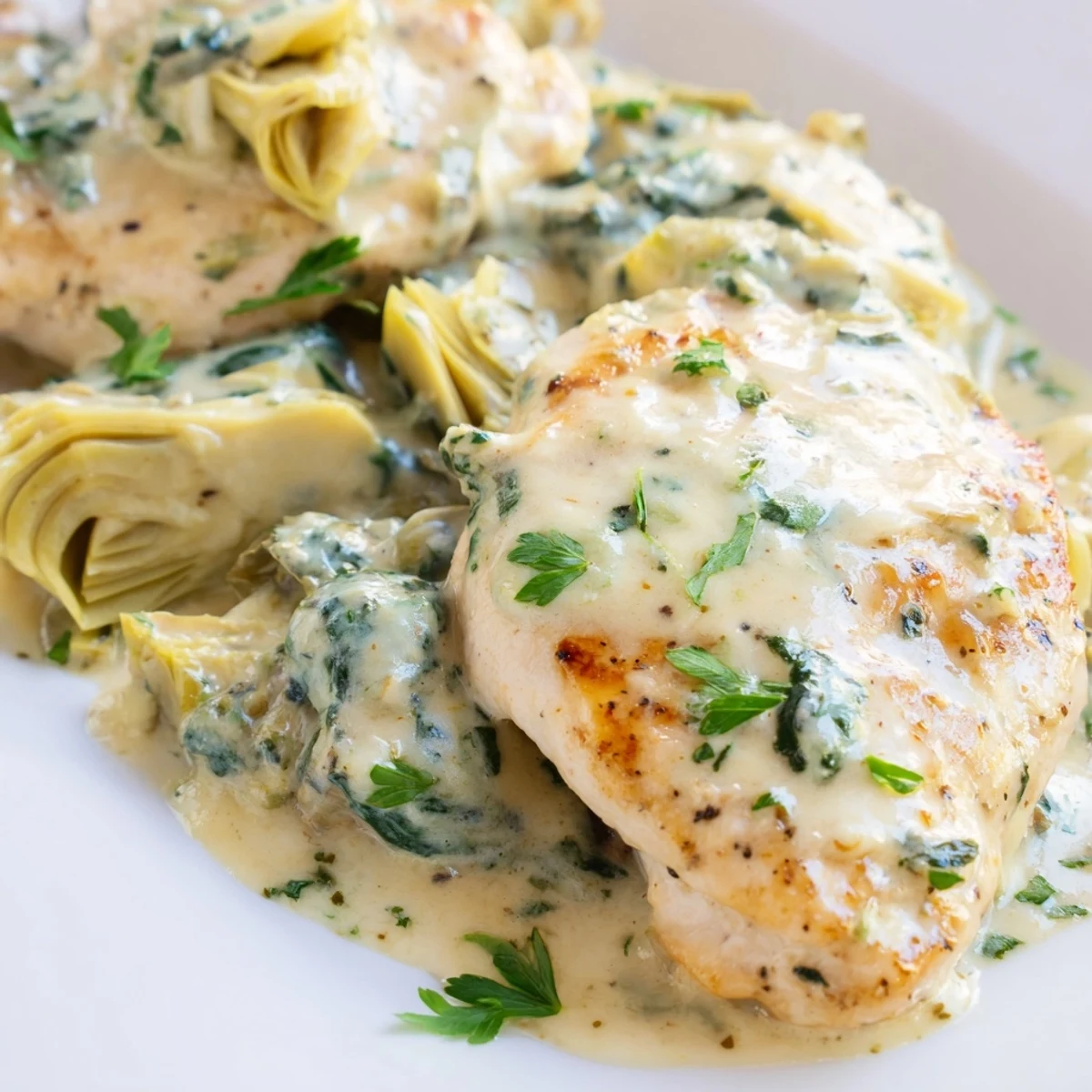
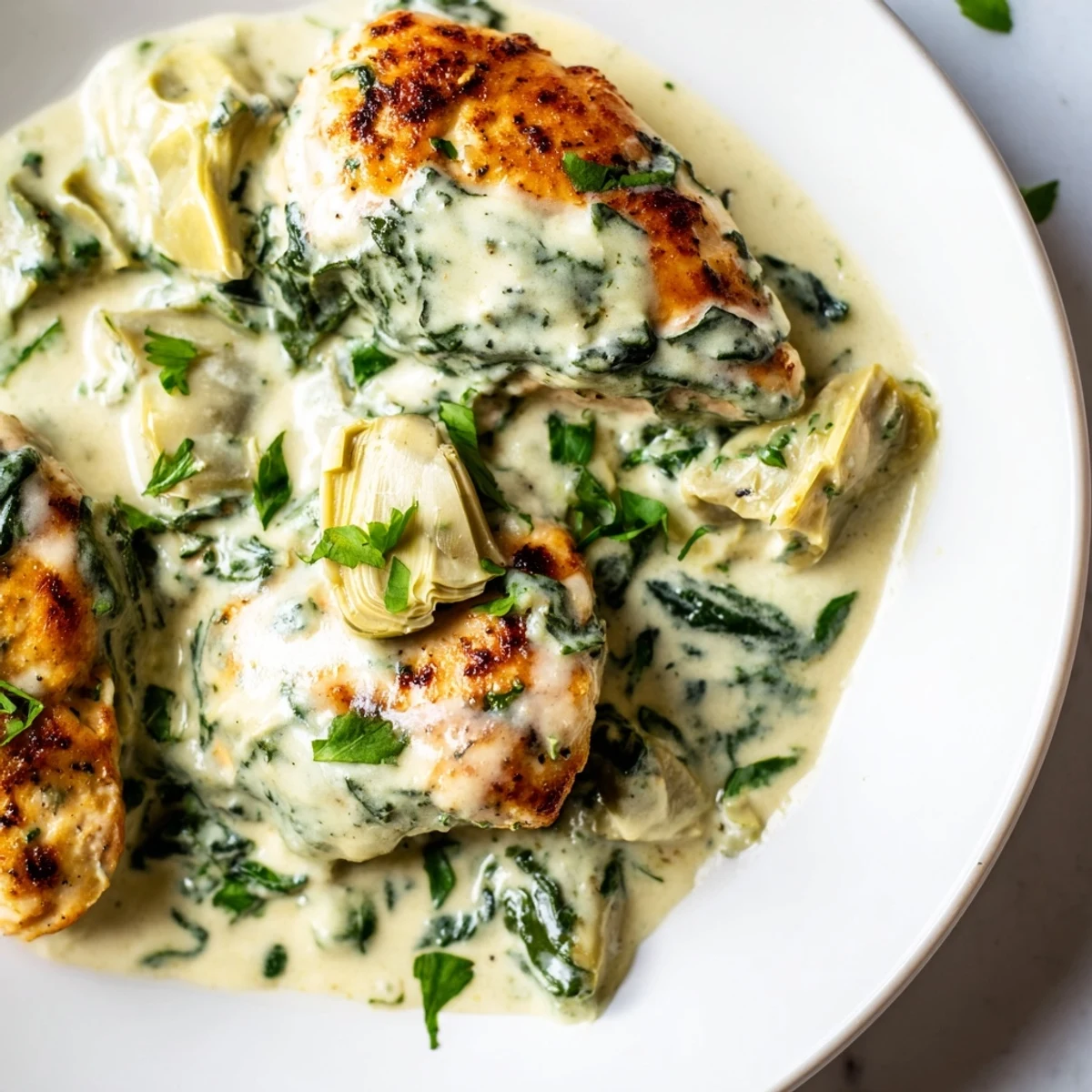
 This dish features juicy chicken breasts cooked in a rich, creamy sauce filled with fresh spinach and tender artichoke hearts. Sautéed garlic and Parmesan add depth to the sauce, enhanced with hints of Dijon and Italian herbs. Simmered gently until the flavors meld and the chicken is perfectly cooked, it's an easy one-pan dish ideal for a warm, satisfying dinner. Garnish with fresh parsley for a bright finish.
There's a particular kind of magic that happens when you're cooking for someone who's had a rough day, and you want the meal to feel like a warm hug on a plate. That's exactly what this creamy spinach and artichoke chicken skillet is to me—a dish I stumbled upon while rummaging through my fridge one evening, finding chicken, a can of artichokes, and some wilting spinach that needed rescuing. The combination seemed obvious in hindsight, but that first time I made it, I wasn't sure if the flavors would actually work together. Twenty-five minutes later, I was ladling creamy sauce over golden chicken, and my kitchen smelled like a restaurant I'd want to visit again and again.
I made this for my partner on a Tuesday night when we were both exhausted, and I remember the exact moment they took that first bite—they closed their eyes and said nothing for a solid ten seconds, which for them is the highest compliment. It's become one of those dishes we request without apology, the kind that goes from inspiration to table with such ease that it feels almost like cheating to call it a recipe.
Ingredients
- Boneless, skinless chicken breasts: Four breasts about 1.5 pounds give you enough protein for four people without the dish feeling heavy. Pat them dry before seasoning—moisture is the enemy of a good sear, and a good sear is what makes this whole dish sing.
- Salt and black pepper: Half a teaspoon of each is your starting point, but taste as you go because every stove and every pan behaves differently.
- Olive oil: Just a tablespoon to get that skillet hot enough to sear the chicken properly.
- Fresh spinach: Three cups chopped is enough to wilt down into the sauce without overwhelming it. Frozen works too, but thaw it first and squeeze out the excess moisture.
- Canned artichoke hearts: One can drained and quartered saves you the trouble of fresh prep, and honestly, they're just as good.
- Unsalted butter: Two tablespoons is the foundation of your sauce, the base note that everything else builds on.
- Garlic: Three cloves minced fine will perfume the whole skillet within seconds of hitting the hot butter.
- Heavy cream: A full cup is what makes this creamy, though you can use half-and-half if you want something lighter.
- Low-sodium chicken broth: Half a cup helps balance the richness and keeps the sauce from being too heavy.
- Parmesan cheese: Half a cup grated adds nutty depth and helps the sauce thicken naturally as it simmers.
- Dijon mustard: Just a teaspoon, but don't skip it—it's the secret that makes people ask what that subtle complexity is.
- Dried Italian herbs: Half a teaspoon rounds everything out without overpowering the delicate vegetables.
- Fresh parsley: Two tablespoons chopped for garnish is optional, but it brightens the whole plate.
Instructions
- Prepare your chicken:
- Pat your chicken breasts completely dry with paper towels—this is the step that makes the difference between a timid sear and a golden, caramelized one. Season both sides generously with salt and pepper, letting the seasoning sit for a minute so it actually adheres instead of sliding off.
- Sear the chicken:
- Heat your skillet over medium-high heat until a drop of water skitters across the surface, then add the olive oil. Once it shimmers, lay the chicken breasts in carefully and let them be—resist the urge to move them around. After 4-5 minutes, they should release easily and be golden brown underneath; flip them and cook the other side the same way. Transfer to a plate and don't worry that they're not fully cooked through yet.
- Build your sauce base:
- Lower the heat to medium and add the butter to the same skillet, letting it foam slightly before adding your minced garlic. You'll know it's ready when the smell hits you—garlicky and toasted—usually about a minute in. Don't let it brown or it'll taste bitter.
- Create the creamy foundation:
- Pour in the heavy cream and chicken broth, stirring gently to combine. Add the Parmesan cheese, Dijon mustard, and Italian herbs, stirring constantly for 2-3 minutes until the mixture thickens slightly and the cheese is completely melted. Taste it at this point—this is your chance to adjust seasoning if you need to.
- Add the vegetables:
- Stir in your chopped spinach and quartered artichoke hearts, cooking for 2-3 minutes until the spinach wilts completely and the artichokes warm through. The spinach will reduce dramatically as it wilts, which always surprises people the first time they make this.
- Reunite chicken with sauce:
- Nestle your seared chicken breasts back into the skillet, spooning the creamy sauce over the top so it coats each piece. Reduce the heat to low, cover the skillet, and let everything simmer gently for 8-10 minutes until the chicken reaches 165°F in the thickest part.
- Finish and serve:
- Remove from heat, scatter fresh parsley over the top if you're using it, and serve straight from the skillet with rice, mashed potatoes, or crusty bread for soaking up every bit of that sauce.
 Pin This
 This dish has a way of turning an ordinary weeknight into something special, the kind of meal that makes people linger at the table a little longer than usual. There's something about creamy, savory food served in one pan that says 'I care' without saying anything at all.
Why This Skillet Works Every Time
The beauty of this dish is how forgiving it actually is, despite looking fancy enough to impress. The one-pan approach means everything cooks together and flavors meld, so even if your timing is slightly off, the chicken comes out juicy and the sauce wraps around everything like it was meant to be there. I've made this in cast iron, stainless steel, and non-stick, and it works beautifully in all of them.
Variations That Keep It Interesting
Once you've made this a few times and it becomes comfortable, there's room to play. Sun-dried tomatoes add a subtle sweetness and complexity that makes people pause and ask what that flavor is. Roasted red peppers work the same way, or you could add a handful of fresh mushrooms for earthiness. I've even stirred in a tablespoon of pesto at the very end instead of the Italian herbs, and it transforms the whole thing into something different but equally craveable.
Serving Suggestions and Pairings
This creamy, vegetable-loaded dish pairs beautifully with something to soak up the sauce—buttered egg noodles, creamy mashed potatoes, or a pile of fluffy rice all disappear quickly. If you want something lighter, a simple green salad on the side cuts through the richness perfectly and keeps the whole meal feeling balanced rather than heavy.
- Serve it in shallow bowls rather than on plates, because the sauce deserves respect and an audience.
- If you have guests, make this ahead and reheat it gently over low heat with a splash of broth to loosen it back up.
- Leftovers are actually better the next day—store them in an airtight container and they keep for up to three days.
 Pin This
 This is the kind of recipe that becomes part of your regular rotation, the one you make when you want comfort but don't want stress. It's reliable, it's delicious, and somehow it always feels like you're cooking something special.
Recipe FAQs
- → What type of chicken is best for this dish?
-
Boneless, skinless chicken breasts work best as they cook evenly and absorb the creamy sauce well.
- → Can I use frozen spinach instead of fresh?
-
Yes, but be sure to thaw and drain the spinach thoroughly to avoid excess moisture in the sauce.
- → How can I make the sauce thicker?
-
Simmer the sauce a bit longer or add a small amount of cornstarch slurry to reach the desired consistency.
- → Is there a substitute for heavy cream?
-
Half-and-half can be used for a lighter sauce, but it may be less rich and creamy.
- → What sides pair well with this dish?
-
Mashed potatoes, rice, or crusty bread complement the creamy sauce and chicken nicely.