 Pin This
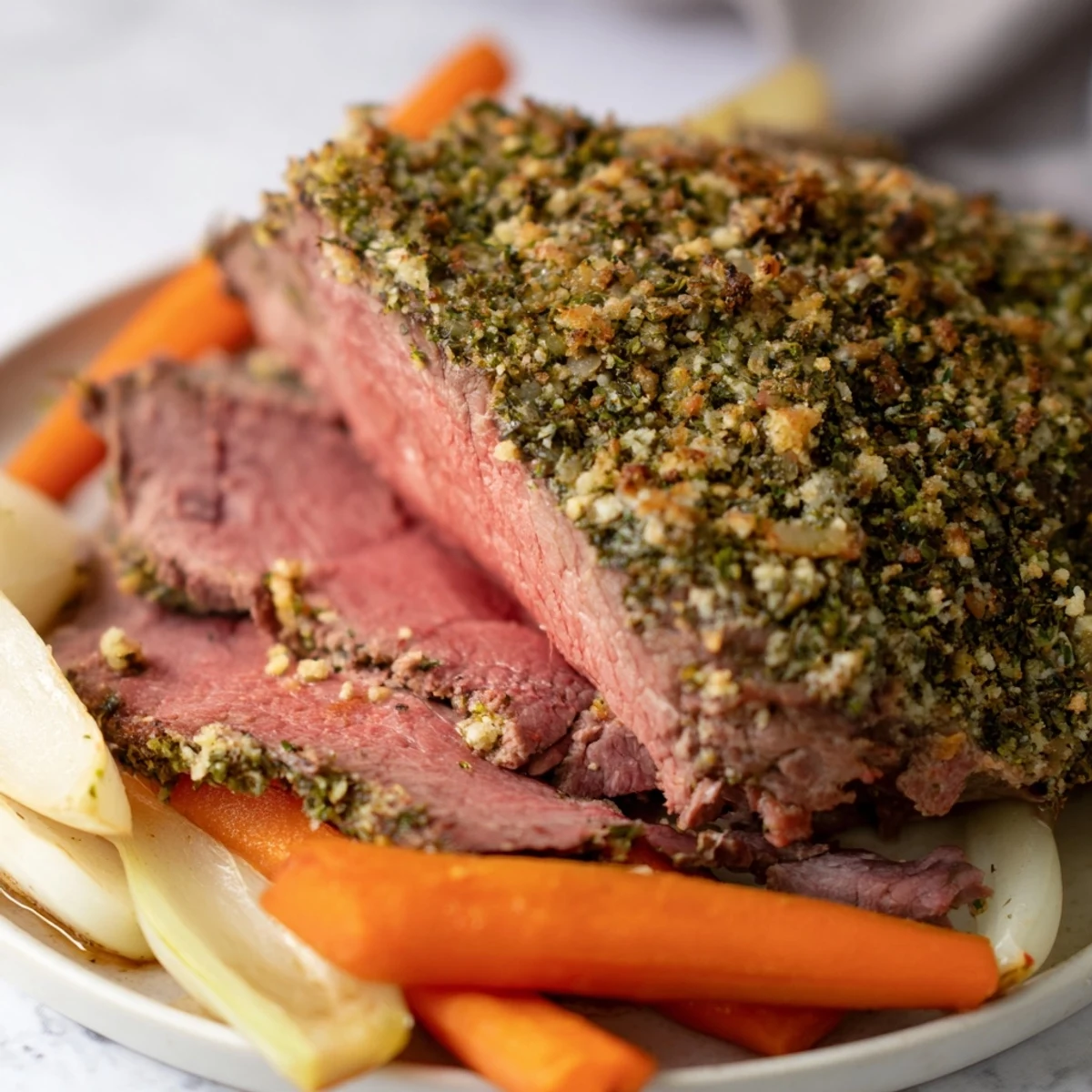
 This dish features a tender topside cut cloaked in a herbaceous crust of parsley, rosemary, thyme, garlic, and Dijon mustard. The beef is set atop a bed of sliced onion, carrots, and celery to infuse rich flavors during roasting. Starting at a high temperature to seal in juices, it slows to a moderate roast for even cooking. Resting before slicing ensures a juicy and tender bite, perfect for a hearty main course. Optional red wine adds depth to pan juices, elevating the dish's savory profile.
There's a particular Sunday in early autumn that comes to mind—the kind where the kitchen fills with the smell of roasting beef before anyone else in the house has even woken up. My neighbor had just given me a tip about scoring the fat on a good topside roast, and I decided that morning was the moment to finally get it right. That first time, watching the herb crust deepen to a mahogany brown while the vegetables underneath began to char slightly, I realized this wasn't just a roast—it was the smell of a meal that would linger in conversation long after we'd finished eating.
I cooked this for my parents' anniversary dinner, and my dad—who usually nitpicks everything—asked for seconds without a word. The kitchen had been a bit chaotic that day, but somehow when we carved into that golden-crusted beef and the juices pooled on the plate, everything felt intentional and perfect. That's when I knew this recipe deserved to become a regular thing, not something reserved for special occasions.
Ingredients
- Beef topside roast (1.5 kg): Choose a piece with an even shape and a thin layer of fat on top—the fat renders during roasting and keeps the meat tender, while the flat cut slices beautifully for serving.
- Olive oil (2 tbsp): Use a good quality oil; it becomes the base that helps the herbs and mustard cling to the beef and forms part of the crust.
- Dijon mustard (2 tbsp): The mustard adds a subtle tang and helps bind the herb mixture while also tenderizing the surface of the meat slightly.
- Fresh parsley, rosemary, and thyme (3 tbsp total): Fresh herbs are non-negotiable here—dried ones turn dusty and bitter in the oven, so find the brightest green bunches you can.
- Garlic cloves (4, minced): Mincing them finely ensures they cook through and infuse the crust evenly without burning or being overwhelming.
- Sea salt and black pepper (1 tsp plus 1/2 tsp): Season generously; the crust needs enough seasoning to stand up to the savory beef.
- Onion, carrots, and celery: These vegetables create a natural trivet that keeps the beef elevated and roasts alongside it, building rich pan juices for serving.
Instructions
- Bring everything to room temperature:
- Remove the beef from the fridge 30 minutes before cooking, and preheat the oven to 200°C (400°F, gas mark 6). Cold meat doesn't cook evenly, so this step is worth the patience.
- Make the herb crust:
- Mix olive oil, Dijon mustard, parsley, rosemary, thyme, minced garlic, salt, and pepper in a small bowl until you have a fragrant paste. Let it sit for a minute so the flavors start to meld.
- Prepare the roasting tin:
- Pat the beef completely dry with paper towels—any moisture prevents the crust from browning properly. Arrange onion slices, carrots, and celery chunks in the tin to form a natural platform for the beef to sit on.
- Coat the beef:
- Place the beef on top of the vegetables and rub the herb mixture all over it, pressing firmly so it adheres and forms a proper crust rather than sliding off during roasting.
- Roast high then low:
- Start at 200°C for 20 minutes to sear the crust, then reduce to 180°C (350°F, gas mark 4) and continue for about 1 hour 10 minutes. Use a meat thermometer to check for doneness: 54°C (130°F) for medium-rare, 60°C (140°F) for medium.
- Rest the beef:
- Remove from the oven, loosely cover with foil, and let it rest for at least 20 minutes. This allows the juices to redistribute through the meat so every slice stays moist and tender.
- Carve and serve:
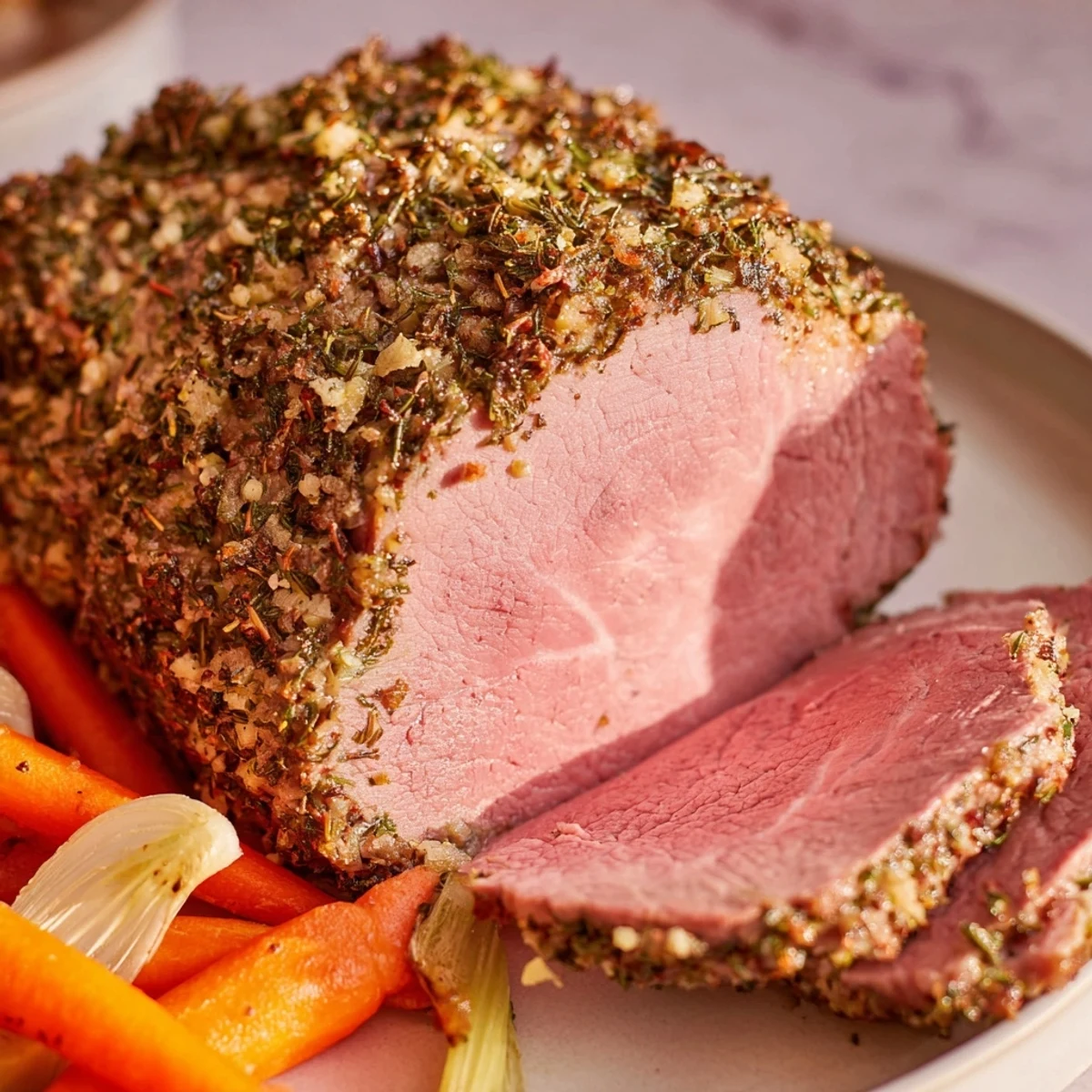
- Slice against the grain using a sharp knife, and serve with the pan juices spooned over top and the roasted vegetables alongside.
 Pin This
 What I didn't expect was how a simple herb crust would become the reason people actually remember a meal. My sister still texts me saying she can't replicate that crust, and honestly, that might be my favorite kitchen compliment I've ever received.
The Herb Crust Secret
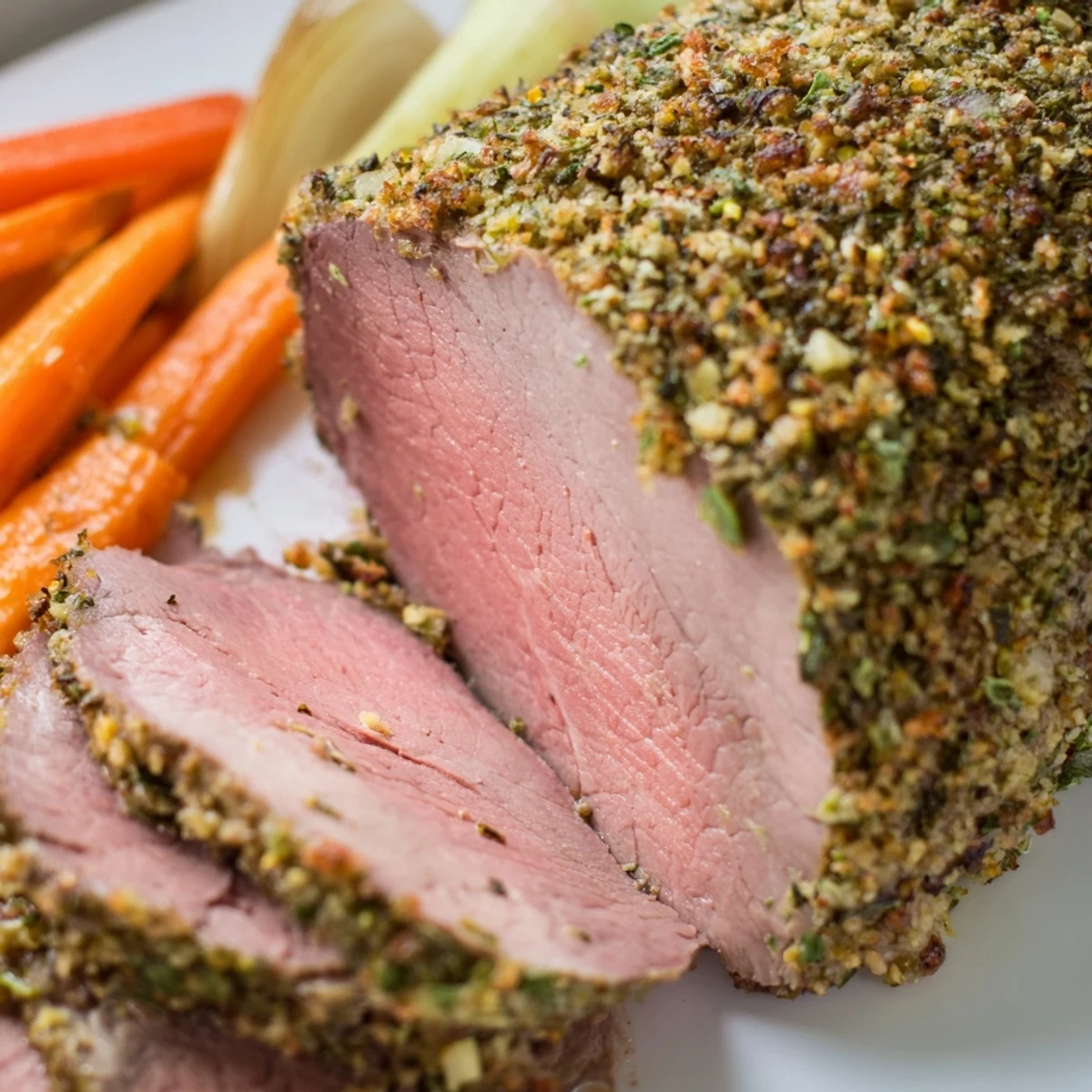
The magic happens at the intersection of several small decisions. The mustard provides both flavor and stickiness, the olive oil carries the herbs' aromatics, and the minced garlic melts slightly into a savory base that deepens as the roast cooks. I've learned that the crust works best when the beef is absolutely dry before application—any dampness creates steam that prevents browning. Don't be timid about pressing the herb mixture onto the meat; you want it to form almost a bark by the end of cooking.
Temperature and Timing Matter More Than You Think
The two-temperature roasting method exists for a reason. Starting hot creates that flavorful crust while keeping the interior rare, then lowering the heat allows gentle carryover cooking that brings the center up to the perfect temperature without overdoing the outside. I once skipped the high-heat sear phase thinking I'd save time, and the result was pale and bland; never again. The vegetables underneath roast perfectly in this environment, absorbing beefy juices and becoming almost as memorable as the beef itself.
Pairing and Serving
This roast becomes a complete meal when served with crispy roast potatoes and the silky pan juices. Yorkshire puddings turn it into something special enough for celebration, but it's equally lovely with just a simple green salad and crusty bread to soak up the juices. The beauty of topside is that it slices cleanly, so plating feels effortless and looks impressive—which is half the battle when feeding people you want to impress.
- Add a splash of red wine to the roasting tin halfway through cooking for deeper, richer pan juices.
- English mustard can replace Dijon if you want more heat and a sharper edge.
- Leftover sliced beef is spectacular in sandwiches the next day.
 Pin This
 This recipe has become my go-to for moments that matter—the kind of meal that turns a regular Sunday into something worth remembering. Once you've made it once and seen the way people react to that herb crust, you'll understand why it becomes a favorite.
Recipe FAQs
- → What cut of beef is best for this dish?
-
Topside beef is ideal for its balance of tenderness and flavor, roasting beautifully with a herb crust.
- → How do I ensure the beef remains juicy?
-
Allow the beef to rest covered after roasting and use a meat thermometer to avoid overcooking.
- → Can I prepare the herb crust mixture in advance?
-
Yes, making the herb paste beforehand helps flavors meld and speeds up the preparation time.
- → What vegetables complement the roasting process?
-
Onions, carrots, and celery create a flavorful base that enhances pan juices and adds aroma.
- → How can I adjust the doneness to suit preference?
-
Use a thermometer and roast until 54°C for medium-rare or 60°C for medium doneness.
- → Are there alternative seasonings to try?
-
Substituting English mustard for Dijon adds more heat, and a splash of red wine enriches pan flavors.