
 Pin This
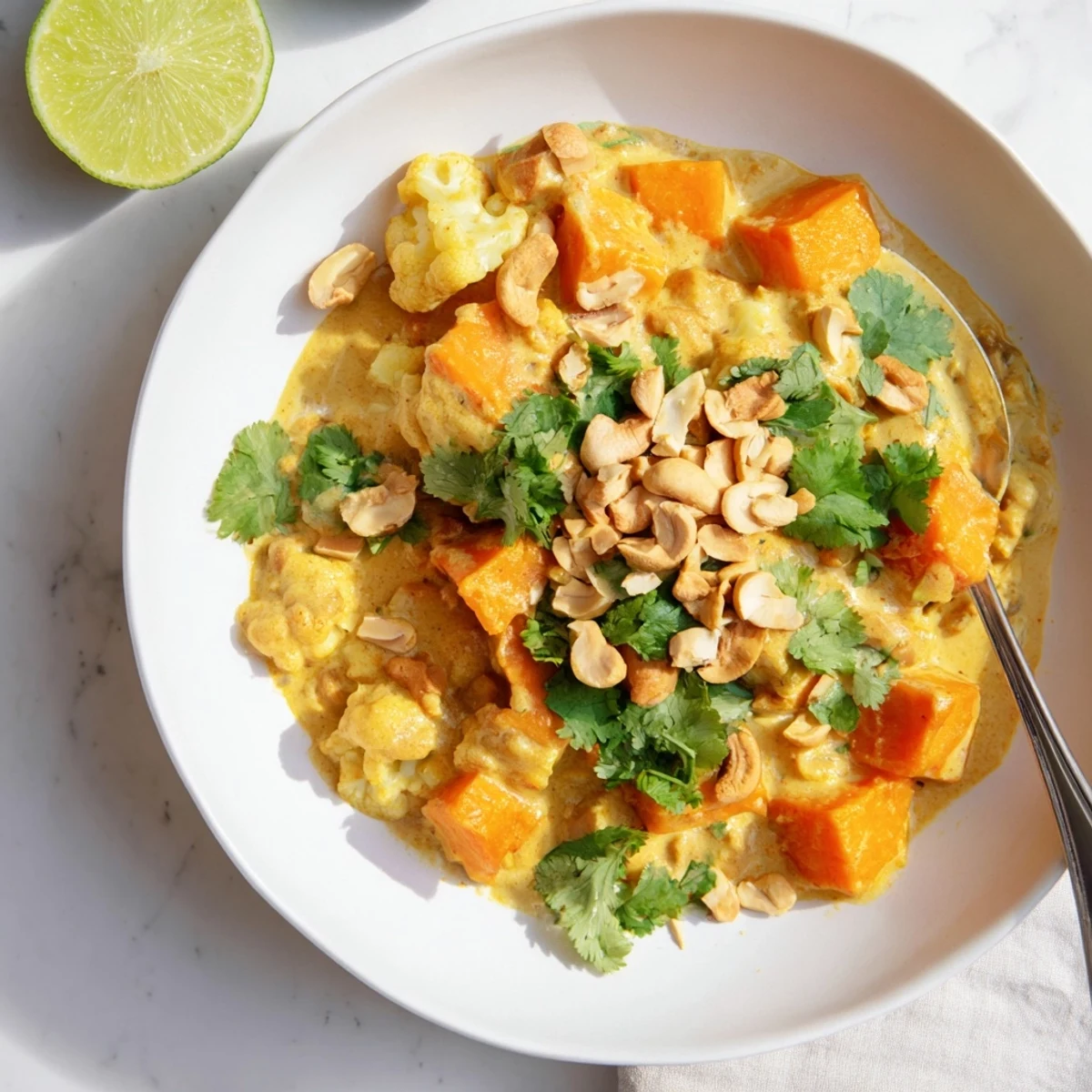
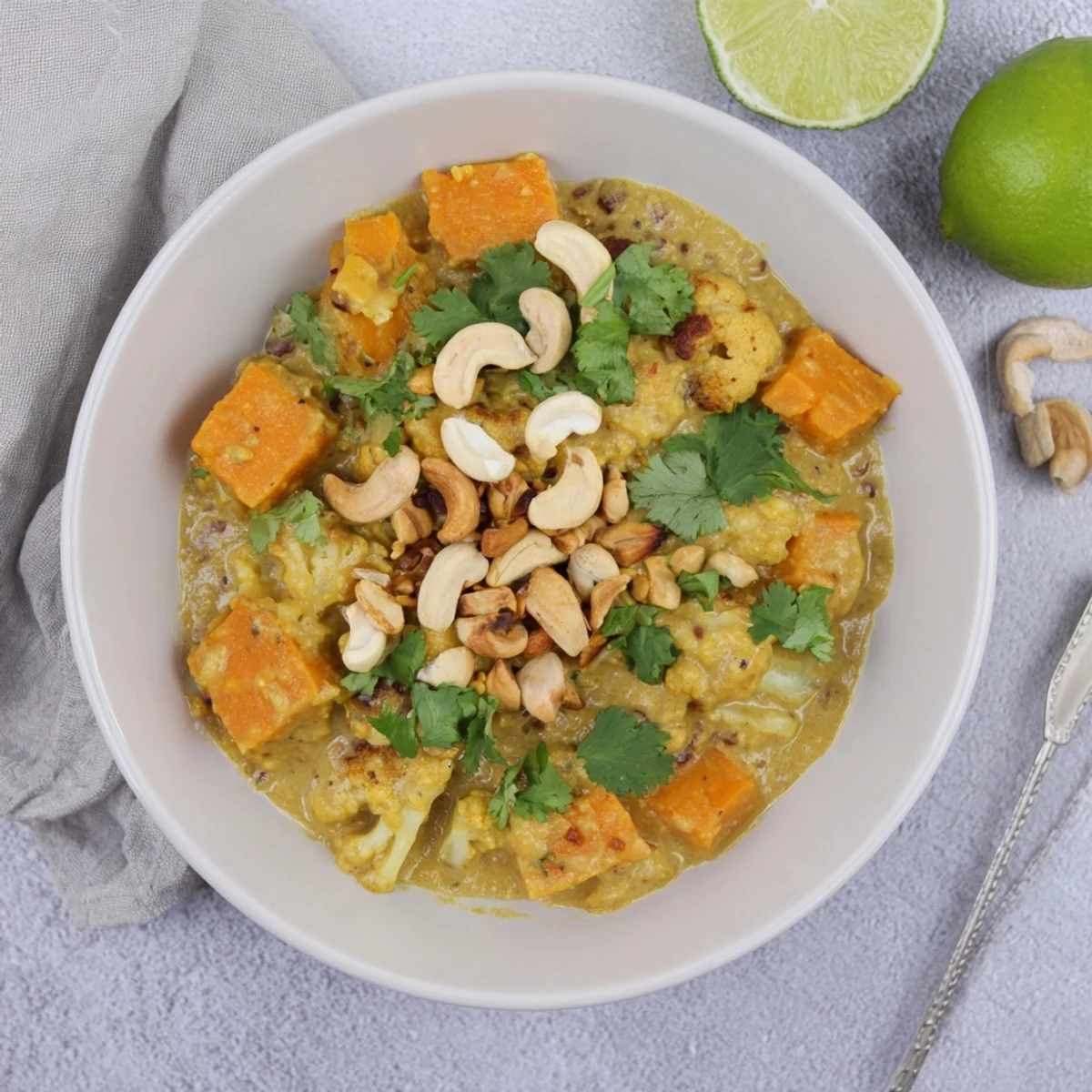
 This vibrant korma combines tender kumara and cauliflower florets in a luxuriously creamy coconut-cashew sauce, infused with warming Indian spices like coriander, cumin, and garam masala. The dish achieves its velvety texture through a blend of toasted cashews puréed with coconut milk and yogurt, creating a rich yet balanced sauce that coats each vegetable perfectly. The mild heat from green chili and chili powder is tempered by the natural sweetness of sweet potatoes and the subtle warmth of cinnamon, making this an approachable curry for all spice preferences. Finished with freshly toasted cashews and cilantro, this nourishing dish pairs beautifully with basmati rice or naan bread for a satisfying vegetarian meal.
The first time I made this korma, my apartment smelled so incredible that my neighbor knocked on my door thinking I had ordered takeout from the best Indian place in town. I laughed and invited her in for a bowl instead. That night taught me that rich, complex flavors do not always require hours of work.
I started making this curry during winter when I wanted something warming but not heavy. The way the sweet kumara balances with the gentle spices became my go-to comfort food on gray days. My friends started requesting it for every dinner party.
Ingredients
- 2 medium kumara (sweet potatoes), peeled and cubed: The natural sweetness balances the spices beautifully and holds its shape through simmering
- 1 small cauliflower, cut into florets: Adds texture and soaks up the korma sauce like little flavor sponges
- 1 medium onion, finely chopped: The foundation that creates depth when caramelized properly
- 2 cloves garlic, minced: Fresh garlic makes all the difference in the aromatic base
- 1-inch piece fresh ginger, grated: Grated fresh ginger brings a bright warmth that powder cannot match
- 3/4 cup raw cashews, divided: Half creates the silky sauce base, half adds the perfect crunch on top
- 1/2 cup coconut milk: The secret to that luxurious texture without dairy
- 1/2 cup plain yogurt or coconut yogurt: Adds tang and creaminess to balance the sweet vegetables
- 2 tablespoons ghee or vegetable oil: Ghee adds traditional flavor but oil keeps it vegan
- 2 tablespoons tomato paste: Concentrates the sauce and gives it that gorgeous deep color
- 1 teaspoon ground coriander: Citrusy notes that brighten the whole dish
- 1 teaspoon ground cumin: Earthy foundation that makes it taste authentic
- 1/2 teaspoon ground turmeric: Beautiful golden hue and subtle bitterness
- 1/2 teaspoon garam masala: The warming spice blend that finishes with complexity
- 1/4 teaspoon ground cinnamon: Just a hint adds a layer of warmth without making it taste like dessert
- Fresh cilantro and lime wedges: These bright toppings cut through the richness
Instructions
- Toast the cashews until golden and fragrant:
- Heat a dry skillet over medium heat and toss in all the cashews. Stir constantly for 3 to 4 minutes until they turn golden brown and smell nutty. Watch closely because they go from perfect to burned quickly. Remove 1/4 cup for garnish and set the rest aside for the sauce.
- Blend the cashew cream base:
- Combine the 1/2 cup toasted cashews with coconut milk in a blender. Puree until completely smooth with no gritty bits remaining. This step is what creates that restaurant-quality silky texture.
- Sauté the aromatics until fragrant:
- Heat ghee or oil in a large pan over medium heat. Add the chopped onion and cook for about 5 minutes until softened and starting to turn golden. Stir in the garlic, ginger, and green chili and cook for just 1 minute until you can smell them.
- Bloom the spices in the hot pan:
- Add all the ground spices directly to the hot aromatics. Stir constantly for 1 minute to wake up their flavors. Add the tomato paste and cook for another minute, stirring until the mixture darkens slightly.
- Coat the vegetables with the spice mixture:
- Add the cubed kumara and cauliflower florets to the pan. Stir everything together for 2 minutes until every piece is coated in the fragrant spice mixture. This step ensures the vegetables absorb flavor from the outside in.
- Simmer until vegetables start to soften:
- Pour in the water and scrape up any browned bits from the bottom. Cover the pan and let everything simmer gently for 10 minutes. The kumara should be starting to soften but still hold its shape.
- Add the creamy sauce and finish cooking:
- Stir in the yogurt and the cashew-coconut mixture. Cover again and simmer for 15 to 20 minutes until the vegetables are tender when pierced with a fork. Stir occasionally to prevent sticking.
- Season and serve with fresh toppings:
- Taste and add salt and pepper as needed. If the sauce seems too thick, splash in a little water. Serve hot in bowls topped with the reserved toasted cashews, fresh cilantro, and lime wedges on the side.
 Pin This
 This curry became my signature dish the night my sister came over heartbroken after a breakup. We ate bowls of it while sitting on the floor talking until midnight. She said it was the first thing that had made her feel warm inside all week.
Making It Your Own
I have learned that the best adaptations come from what you already have in your kitchen. Sometimes I throw in green peas or spinach during the last 5 minutes for extra color. The beauty of this korma base is how forgiving it is with additions.
Serving Suggestions
Steamed basmati rice is classic but I have also served it over quinoa for extra protein. Naan bread for scooping up every last drop of sauce is mandatory in my house. A crisp Riesling cuts through the richness perfectly if you drink wine.
Make Ahead Magic
This curry actually tastes better the next day when the spices have had time to mingle. I often double the recipe and freeze portions for busy weeks. The texture holds up beautifully and it saves me from ordering takeout.
- Reheat gently with a splash of water to restore the creamy consistency
- The flavors deepen overnight so it is perfect for meal prep
- Freeze in individual portions for up to 3 months without any loss of quality
 Pin This
 There is something deeply satisfying about a vegetarian curry that feels so indulgent. This korma has become the dish I make when I want to feed people something that feels like a warm hug.
Recipe FAQs
- → Can I make this korma vegan?
-
Yes, simply substitute the plain yogurt with coconut yogurt and use vegetable oil instead of ghee. The creamy texture and flavor remain excellent with these plant-based alternatives.
- → What can I serve with kumara korma?
-
Steamed basmati rice, naan bread, or roti are traditional accompaniments. The mild flavors also pair well with quinoa or cauliflower rice for lighter options.
- → How spicy is this curry?
-
This korma is mild to medium heat. The green chili and chili powder provide gentle warmth, while the creamy coconut and yogurt base balances the spices. Adjust chili amounts to your preference.
- → Can I add other vegetables?
-
Absolutely. Green peas, spinach, chickpeas, or bell peppers work wonderfully. Add quick-cooking vegetables like spinach in the last 5 minutes of simmering.
- → How long does this keep in the refrigerator?
-
Store in an airtight container for up to 4 days. The flavors often improve overnight. Reheat gently on the stovetop, adding a splash of water if needed.
- → Is kumara the same as sweet potato?
-
Yes, kumara is the Māori word for sweet potato, commonly used in New Zealand. Any variety of sweet potato works beautifully in this curry.