
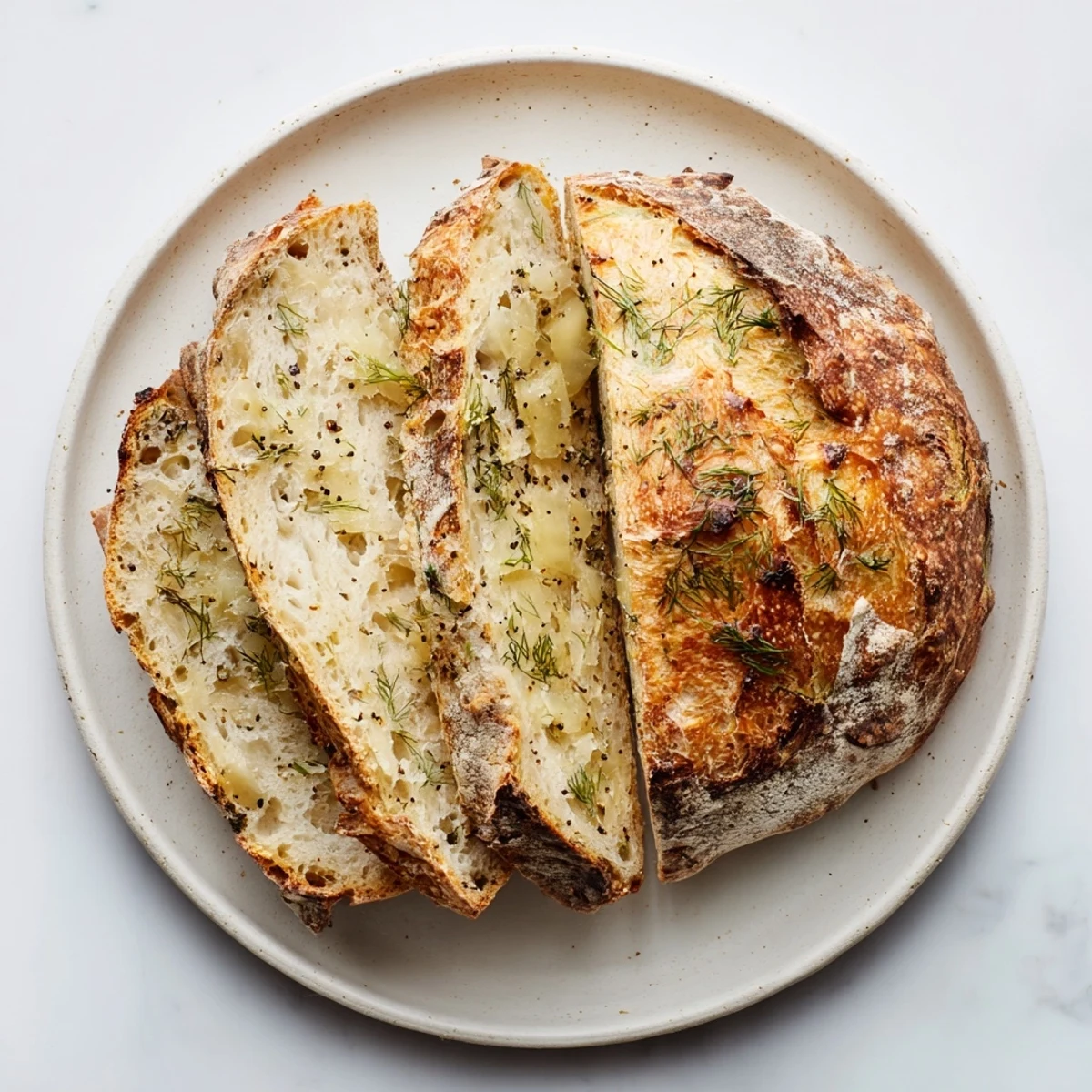
 Pin This
 Create a stunning artisan loaf with minimal effort by combining bread flour, grated Gouda, and fragrant fresh dill. This no-knead method develops deep flavors during an overnight rise, resulting in a bakery-quality bread with a crackly golden crust and tender, airy interior. The Dutch oven baking technique creates professional steam for exceptional texture, while the savory cheese and herb combination delivers irresistible taste in every slice.
The smell of dill and melting cheese drifting through my apartment at midnight was my first clue that no-knead bread was going to change everything. I'd mixed the dough earlier that evening, skeptical that something requiring zero effort could actually produce bakery-worthy results. When I pulled that golden dome from the Dutch oven the next afternoon, watching steam curl off the crackling crust, I understood why people get obsessive about bread baking. This particular loaf, with its pockets of creamy Gouda andfragrant dill, has since become my go-to for dinner parties and quiet weekend afternoons alike.
I first made this on a rainy Sunday when friends were coming over for soup and needed something substantial to soak up the broth. The moment I tore into the loaf, revealing those irregular holes and scattered cheese bits, everyone went quiet. We ended up eating half the bread straight from the cutting board, abandoning the soup entirely. Now whenever I catch the scent of fresh dill at the market, I know exactly what's happening in my kitchen the next day.
Ingredients
- Bread flour: The higher protein content here gives you that beautiful chewy texture and sturdy structure that holds up to all those cheese additions
- Instant yeast: No proofing needed, just mix it right in with the dry ingredients for foolproof results every time
- Gouda cheese: This cheese melts into creamy pockets rather than disappearing completely, giving you those irresistible gooey moments throughout each slice
- Fresh dill: The bright, slightly sweet flavor cuts through the richness of the cheese and creates that aromatic experience that makes this bread unforgettable
- Lukewarm water: Perfect temperature activates the yeast immediately without killing it, jumpstarting that long, slow fermentation process
Instructions
- Mix your base:
- Whisk together flour, salt, and yeast in a large bowl until everything's evenly distributed, then stir in your Gouda, dill, and pepper until the cheese bits are coated in flour
- Bring it together:
- Pour in the water and use a spatula to fold everything until you have a shaggy, sticky mass, but don't worry about getting it smooth, that's not the point here
- Walk away:
- Cover the bowl tightly with plastic wrap and leave it alone on your counter for 12 to 18 hours, letting time and fermentation work their magic
- Shape it gently:
- Turn your bubbly dough onto a heavily floured surface, then use floured hands to fold the edges toward the center until you have a rough round
- Rest again:
- Set the dough seam-side down on parchment, cover it loosely with a towel, and let it puff up for 30 to 60 minutes while you preheat your oven with the Dutch oven inside
- Create the steam:
- Carefully lift the parchment and dough into the screaming hot Dutch oven, slash the top with a sharp knife, and cover immediately to trap the steam
- Bake covered:
- Let it bake for 30 minutes with the lid on, creating that artisan-style crust with a moist interior, almost like having a professional steam injection oven
- Reveal the beauty:
- Remove the lid and bake another 15 to 20 minutes until the bread is deeply golden and sounds hollow when tapped on the bottom
- Patience pays off:
- Cool completely on a wire rack for at least an hour, because slicing into hot bread will ruin that perfect crumb structure you waited all day to achieve
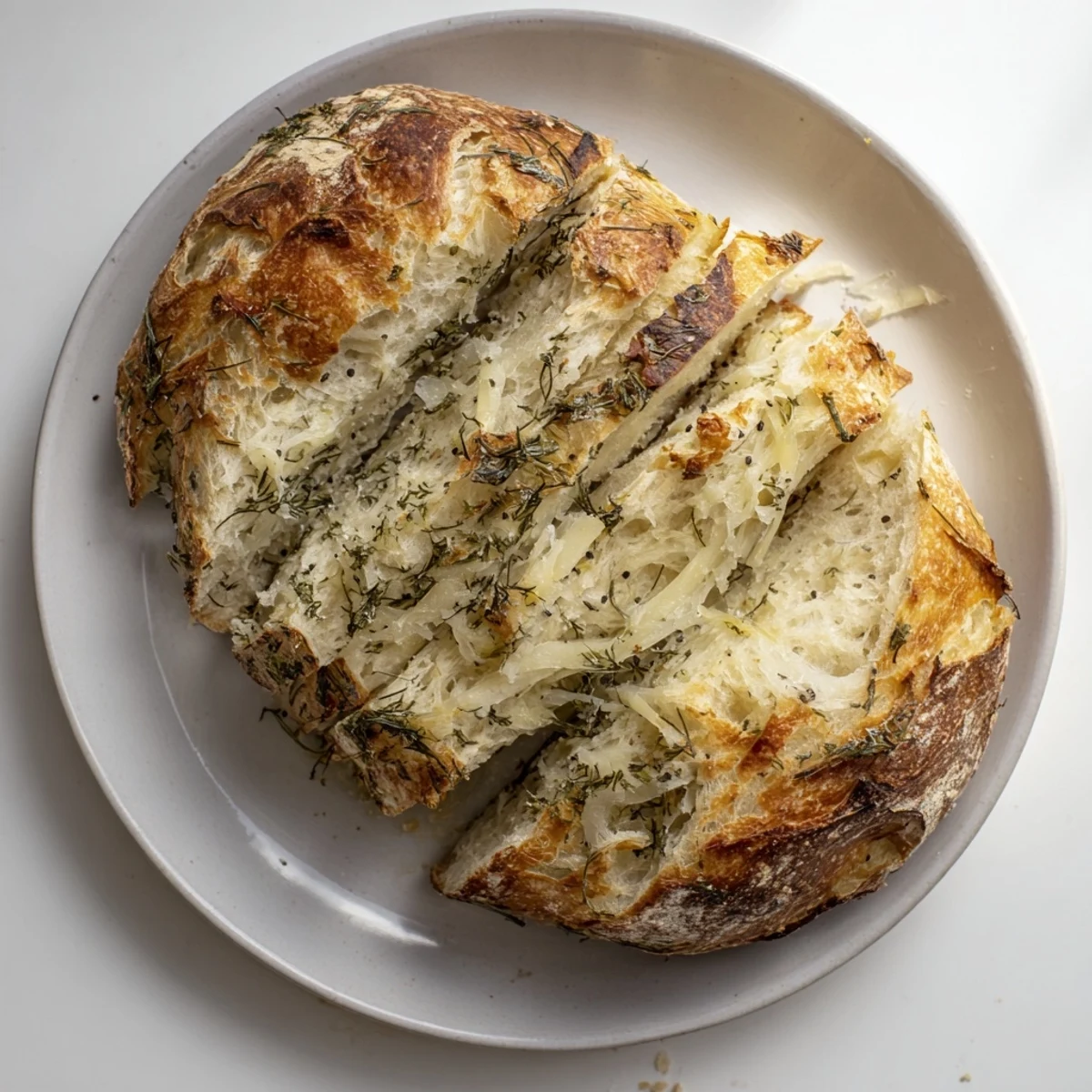 Pin This
 This bread became a permanent fixture in my rotation after I served it at my first real dinner party. Watching people's eyes light up when they tore into a slice and hit a pocket of melted cheese was all the validation I needed. There's something profoundly satisfying about serving something that looks impressive but required almost no active effort.
Choosing Your Cheese
I've learned that harder, aged cheeses work better here because they maintain their structure during the long rise and don't make the dough soggy. Young Gouda creates the creamiest pockets, but aged varieties add that wonderful crystalline texture. If you're feeling adventurous, try mixing in some smoked Gouda for a completely different dimension that'll make your kitchen smell incredible.
Timing Your Dough
After making this dozens of times, I've found that mixing the dough before bed gives me the most consistent results. The 12 to 18 hour rise window is incredibly forgiving, so if you sleep in or get busy, your bread won't suffer. I love waking up to a bowl of bubbly, fermented dough that's practically begging to be baked.
Serving Suggestions
This bread shines alongside hearty soups and stews, but it's substantial enough to stand alone as a snack with good butter. The dill flavor pairs beautifully with smoked salmon or herbed cream cheese for an elevated afternoon treat. Toasted slices make an exceptional base for poached eggs or avocado.
- Leftovers freeze beautifully, just slice first and toast directly from frozen
- The crust softens after day one but revives perfectly in a 350°F oven for 10 minutes
- Store in a paper bag at room temperature to maintain that crisp exterior
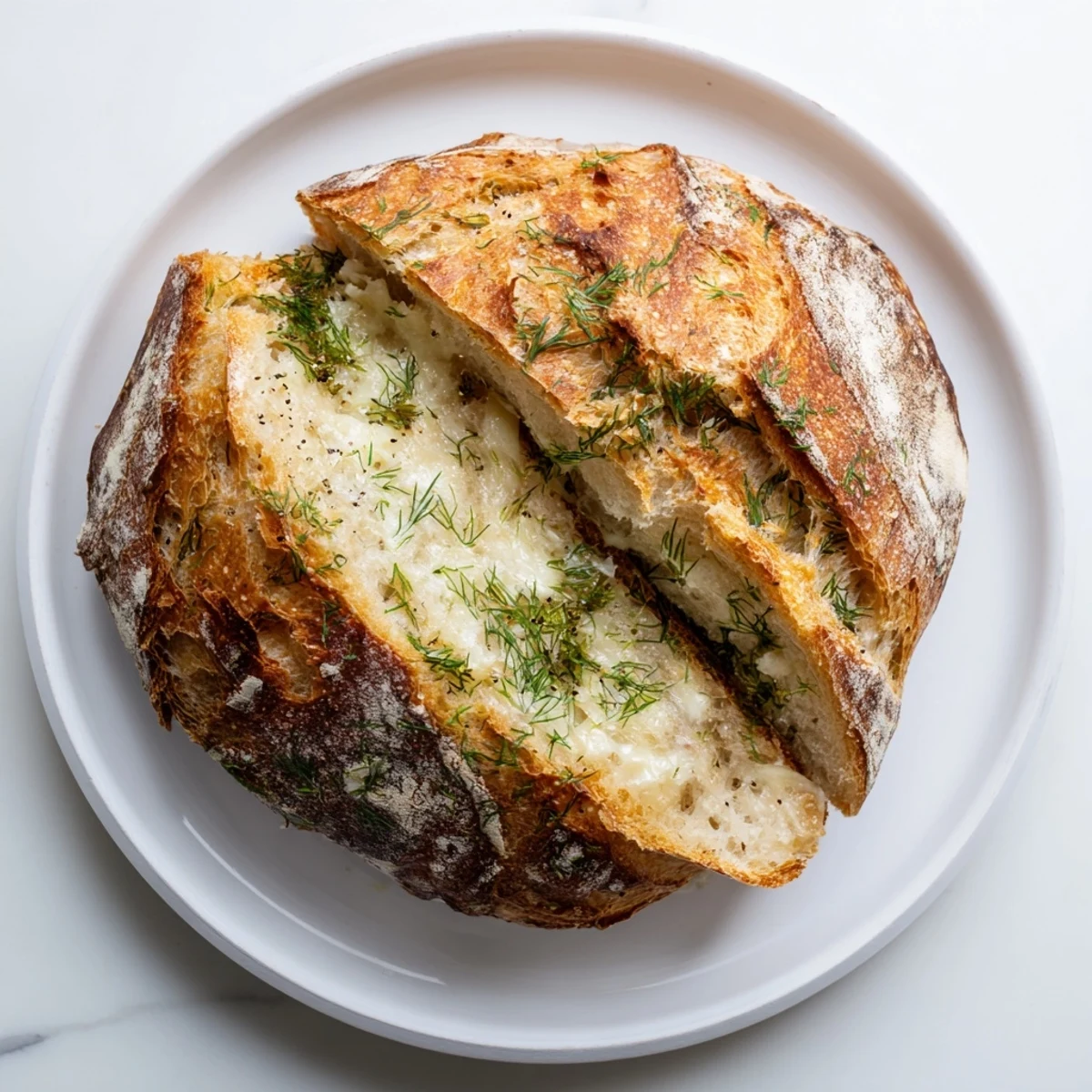 Pin This
 There's nothing quite like the sound of a fresh loaf crackling as it cools on the counter, promising all the delicious moments ahead. This bread has turned more ordinary Tuesdays into something special than I can count.
Recipe FAQs
- → Can I use dried dill instead of fresh?
-
Yes, substitute 1 tablespoon of dried dill for the 3 tablespoons of fresh dill called for in the recipe. The flavor will be slightly more concentrated, so you may want to start with a smaller amount and adjust to taste.
- → What other cheeses work well in this loaf?
-
Cheddar, Emmental, Swiss, Gruyère, or aged provolone make excellent substitutes for Gouda. Choose cheeses that melt well and have pronounced flavor to stand out in the finished loaf.
- → Why does the dough need to rise for 12–18 hours?
-
The extended fermentation time allows natural enzymes to break down starches and proteins, developing complex flavors and improving the bread's texture. This slow rise also creates the characteristic airy crumb structure without requiring kneading.
- → Can I bake this without a Dutch oven?
-
While a Dutch oven creates the ideal steam environment, you can bake on a baking sheet or pizza stone. Place a metal pan of water on the bottom rack of the oven to generate steam, and cover the loaf with foil for the first 30 minutes of baking.
- → How should I store the finished loaf?
-
Wrap the cooled bread in a clean kitchen towel or place in a paper bag at room temperature for up to 2 days. For longer storage, slice and freeze in a freezer-safe bag, then thaw individual slices as needed.