
 Pin This
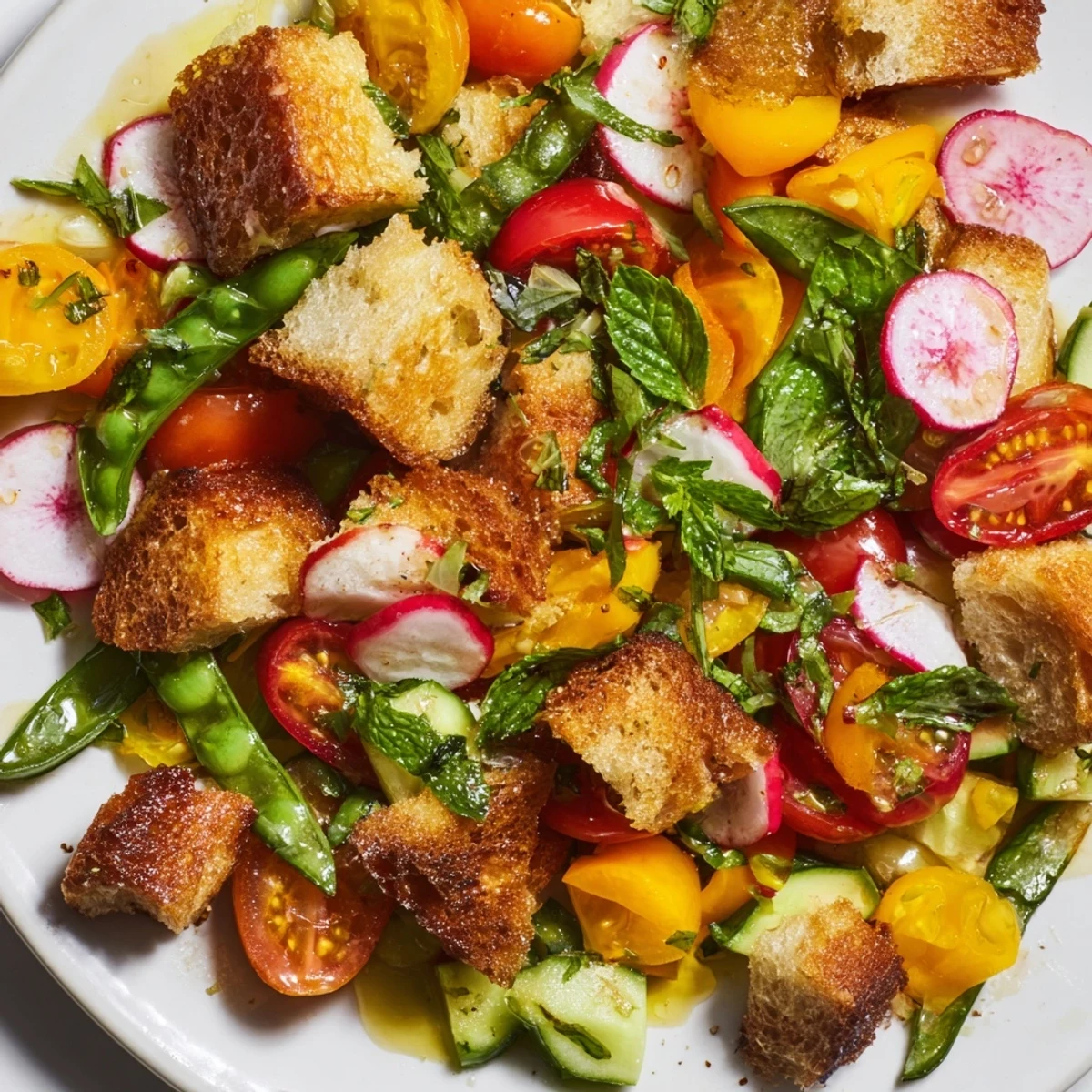
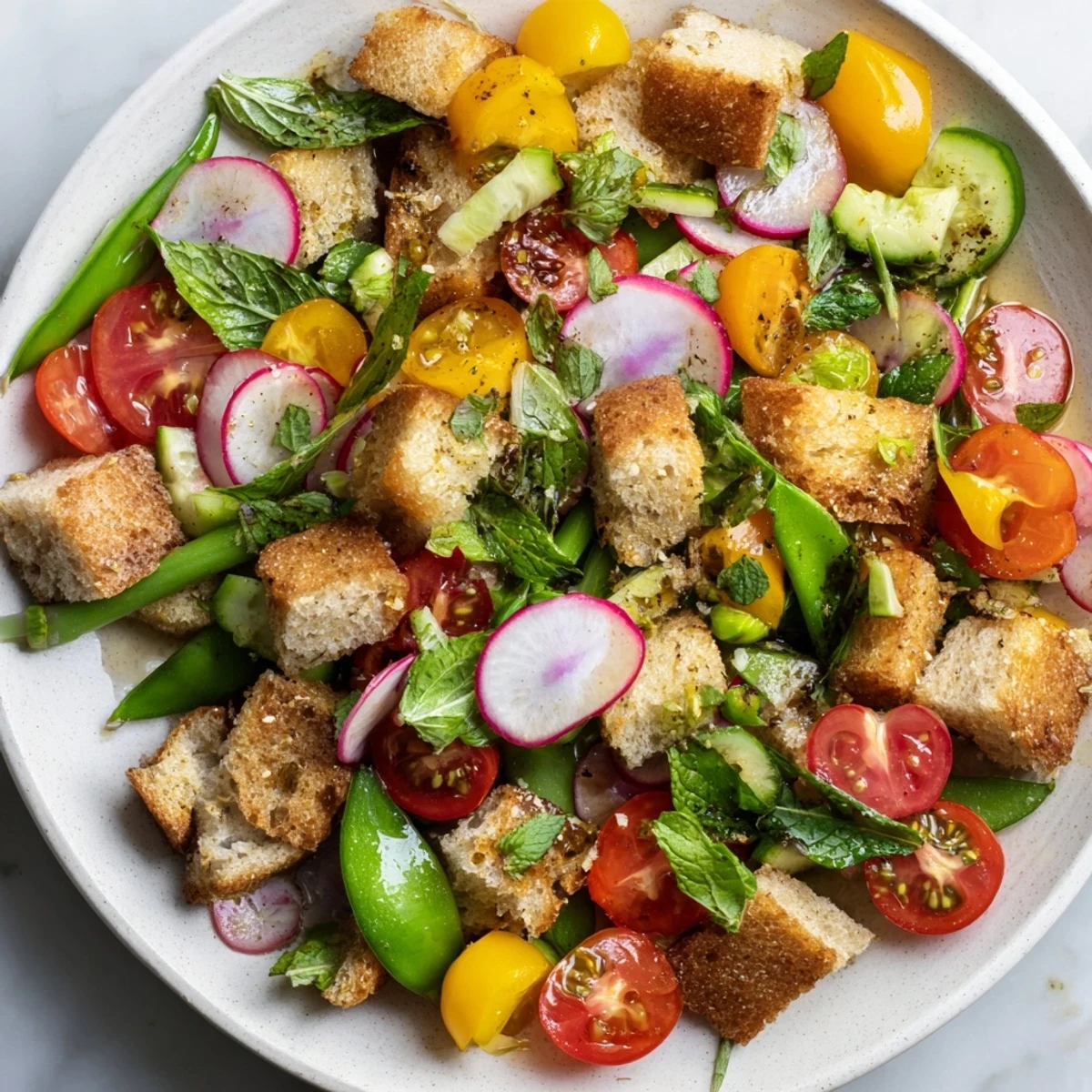
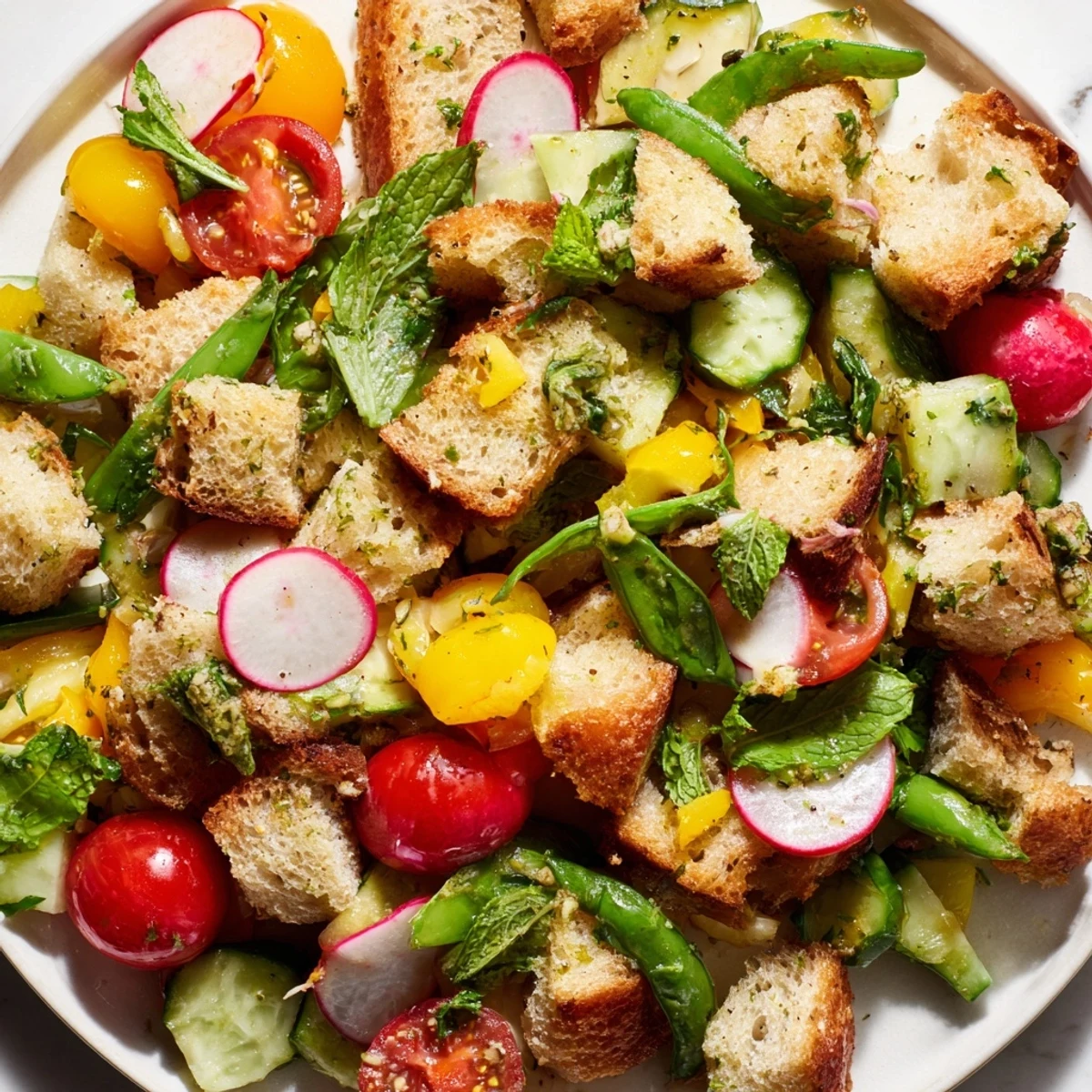
 This vibrant Italian bread salad celebrates spring with crisp sourdough cubes, juicy cherry tomatoes, refreshing cucumber, radishes, sugar snap peas, and bell peppers. Fresh herbs like basil, mint, and parsley add aromatic brightness, while a tangy red wine vinegar dressing ties everything together. The key is letting toasted bread absorb the vegetable juices for perfect texture.
I stumbled upon panzanella during a misty April in Rome, where a tiny trattoria tucked down a cobblestone alley served me this stunning bread salad I couldn't stop thinking about. The crunch of toasted sourdough meeting juicy ripe tomatoes felt like revelation, and I've been chasing that perfect bite ever since. Now whenever spring vegetables start appearing at the farmers market, I know exactly what's coming next for dinner. Something about the way the bread soaks up all those bright flavors just works like magic.
Last summer I made this for my sister's birthday picnic, and honestly, I was nervous it wouldn't travel well. By the time we spread out our blankets, the bread had softened just enough and the dressing had married all the vegetables together. We passed the bowl around until not a single crumb remained, and now she requests it every single year. That's when I realized this isn't just a salad, it's the kind of dish that makes people linger around the table longer.
Ingredients
- 200 g crusty sourdough or ciabatta: Day old bread works beautifully here, and cutting it into even cubes means consistent toasting throughout
- 2 tbsp extra virgin olive oil: This coats the bread before baking, creating those golden crispy edges that will later soak up the dressing
- 250 g cherry tomatoes: When you halve them, they release just the right amount of juices to mingle with everything else
- 1 small cucumber: Fresh crunch that balances the softer elements perfectly
- 1 yellow bell pepper: Adds sweetness and those gorgeous bright yellow flecks throughout
- 6 radishes: Thinly sliced, they bring a lovely peppery bite that cuts through the richness
- 100 g sugar snap peas: Their sweet crunch is quintessentially spring and holds up beautifully
- 2 spring onions: Milder than regular onions and perfect for a fresh salad like this
- 1 small bunch fresh basil: Tearing the leaves releases more oils than chopping, giving you bursts of aromatic flavor
- 2 tbsp fresh mint leaves: This is the secret ingredient that makes everything taste brighter and more alive
- 2 tbsp flat leaf parsley: Brings earthy balance to all the sweet vegetables
- 3 tbsp extra virgin olive oil: Use your best quality oil here since it's front and center
- 1½ tbsp red wine vinegar: Provides just enough acidity to wake up all the vegetables
- 1 small garlic clove: Minced finely so it disperses evenly without overwhelming
- ½ tsp Dijon mustard: Helps emulsify the dressing so it clings to every bite
- ½ tsp sea salt: Enhances all the natural flavors of your vegetables
- Freshly ground black pepper: Grind it right before you make the dressing for the best aroma
Instructions
- Toast the bread until golden:
- Preheat your oven to 180°C (350°F) and toss those bread cubes with olive oil until coated, then spread them on a baking tray in a single layer and bake for 8 to 10 minutes until they are golden brown and crisp, setting them aside to cool completely.
- Prepare all your vegetables:
- In a large salad bowl, combine the halved cherry tomatoes, diced cucumber, yellow bell pepper, thinly sliced radishes, trimmed and halved sugar snap peas, and those spring onions you sliced so thin.
- Whisk together the dressing:
- In a small bowl, whisk together the olive oil, red wine vinegar, minced garlic clove, Dijon mustard, sea salt, and black pepper until completely emulsified and slightly thickened.
- Combine everything:
- Add those cooled toasted bread cubes and all your fresh herbs to the salad bowl, then pour over the dressing and toss everything gently so each piece gets coated without crushing the vegetables.
- Let it rest:
- Allow the salad to sit for about 10 minutes before serving, which gives the bread time to soften slightly and absorb all those wonderful flavors and vegetable juices.
- Season and serve:
- Taste your creation and adjust the seasoning if needed, then serve immediately, perhaps with a few extra basil leaves scattered on top for those who want an extra hit of freshness.
 Pin This
 My neighbor's daughter accidentally discovered that the leftovers make an incredible breakfast the next morning, topped with a soft fried egg. Now whenever I make this for dinner, I intentionally make extra just so I can have that morning treat waiting for me. Sometimes the best discoveries happen completely by accident.
Choosing Your Bread
I've learned that slightly stale sourdough is ideal because it has enough structure to hold up during toasting but still absorbs dressing beautifully. Fresh bread turns mushy too quickly, while overly dry bread never quite softens enough. The perfect bread has that satisfying chew that makes you want to keep eating bite after bite.
Playing With Seasonal Vegetables
While this version celebrates spring vegetables, I've made countless variations based on what's available at the market. Summer brings incredible heirloom tomatoes and fresh corn kernels, while autumn versions might feature roasted squash and thinly sliced Brussels sprouts. The method stays the same, but the character changes with the seasons.
Make It Your Own
Some days I add cubes of fresh mozzarella or crumbled feta right before serving, letting the creaminess play against the crisp vegetables. Other times I'll toss in toasted pine nuts or walnuts for extra crunch and protein. This is one of those recipes that welcomes creativity and rewards experimentation.
- Try adding grilled peaches in summer for a sweet and savory twist
- A drizzle of good balsamic glaze right before serving adds gorgeous depth
- Thinly sliced red onion can replace spring onions when you want more bite
 Pin This
 There's something deeply satisfying about a dish that celebrates simplicity while delivering such complex flavors. Every time I make this, I'm reminded that sometimes the most uncomplicated recipes end up being the ones we return to again and again.
Recipe FAQs
- → What makes panzanella authentic?
-
Authentic panzanella uses stale or toasted bread that soaks up vegetable juices and dressing, creating a satisfying texture. The bread should be crusty varieties like sourdough or ciabatta, and the salad must include ripe tomatoes, cucumber, and aromatic Mediterranean herbs.
- → Can I make this ahead of time?
-
Yes, but wait to add the dressing until 15-20 minutes before serving. The bread needs time to absorb flavors without becoming mushy. Store vegetables and bread separately, then combine when ready to eat for the best texture.
- → What vegetables work best in spring panzanella?
-
Spring shines with crisp, raw vegetables like sugar snap peas, radishes, cucumber, and fresh peas. Yellow bell pepper adds sweetness while cherry tomatoes provide juiciness. Avoid watery vegetables that might make the bread soggy too quickly.
- → How do I prevent the bread from getting soggy?
-
Toast the bread cubes until golden and crisp, then let them cool completely. Add the dressing just 10-15 minutes before serving, allowing bread to absorb some liquid while maintaining texture. The resting period is crucial for flavor integration.
- → What protein additions work well?
-
Torn mozzarella, crumbled feta, or cubes of fresh burrata add creaminess. For protein, try white beans, chickpeas, or grilled shrimp. These additions transform it from a side into a complete main course while keeping the spring aesthetic.
- → Can I use different bread?
-
Any crusty artisan bread works—sourdough, ciabatta, rustic country loaf, or baguette. Avoid soft sandwich bread as it disintegrates. Day-old bread actually works beautifully since it's slightly dried and absorbs dressing without becoming gummy.